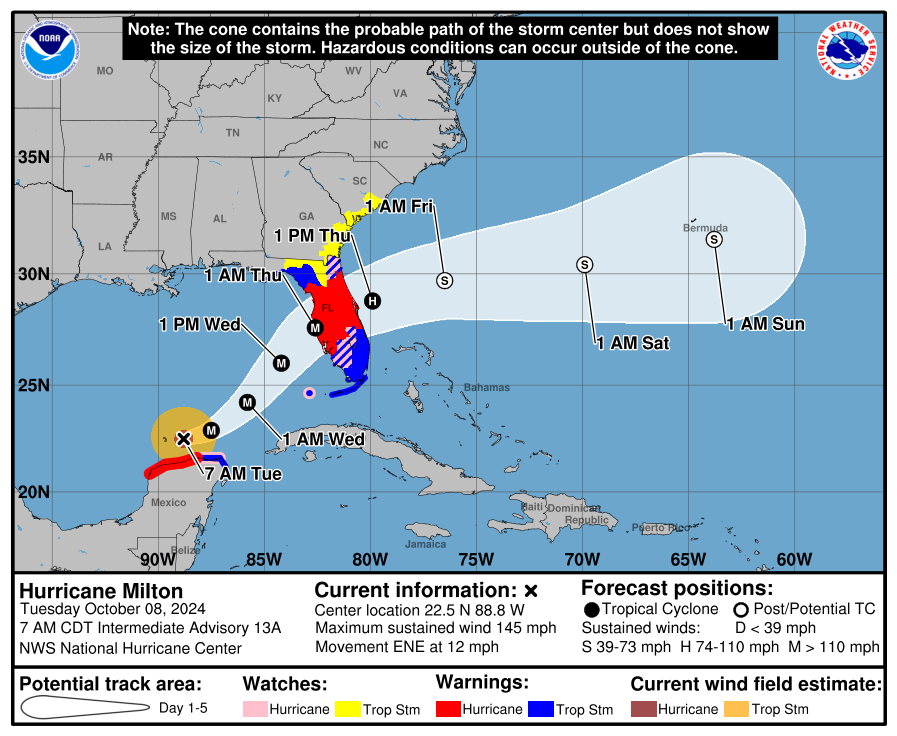
When the State Shuts Down: Navigating Evacuations, Security Vulnerabilities, and Major Storms
When a Category 3, 4, or 5 hurricane targets South Florida, your operational plan completely shifts. You are no longer managing a disrupted vacation; you are overseeing a life-safety crisis.
Many out-of-state owners falter here. They either react to media panic and forfeit thousands in premature cancellations, or they freeze and leave unsuspecting tourists stranded in a mandatory evacuation zone.
To protect your guests, your neighborhood, and your business, you must draw a clear line between business continuity and absolute safety.
Phase 1: Overcoming "The Vacation Weather Panic"
The national news cycle thrives on high-visibility anxiety. The moment a tropical depression forms in the Atlantic, media outlets apply a blanket narrative of impending disaster to the entire state of Florida. This triggers immediate panic in guests whose trips are weeks away, leading to a flood of refund demands before local officials have issued a single watch.
- The Scale Distortion: Florida is massive. A storm making landfall in Jacksonville may not bring a single drop of rain to Miami, but out-of-state guests rarely grasp the peninsula's length.
- The Data Buffer: Do not cancel reservations based on a 5-day predictive track model. Rely strictly on seasoned meteorological analysis, such as Matt Devitt’s hyper-local tropical updates, and official county emergency directives to dictate your timeline.
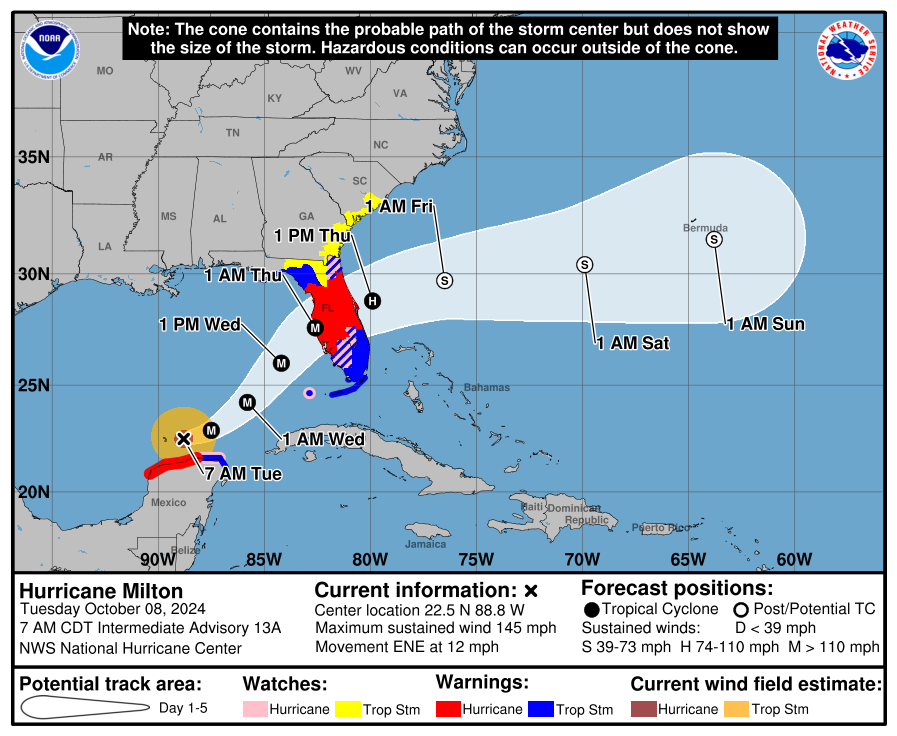
- The Script:
"We hear your concern regarding the current tropical forecast. Currently, Miami-Dade County is not under any watches, warnings, or evacuation orders, and our properties, local airports, and infrastructure are operating normally. Our standard cancellation policy remains in effect. We track hyper-local data continuously and will formally contact you the moment official directives affect your specific travel dates."
Phase 2: The Mandatory Evacuation Protocol
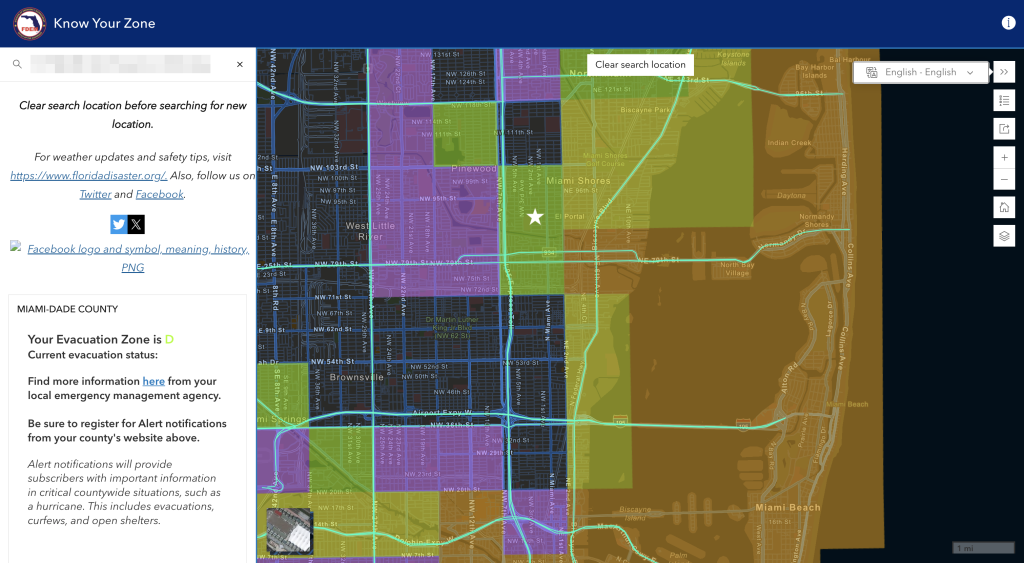
When local officials issue a mandatory evacuation, debates just stop. In Miami-Dade County, our properties sit within Evacuation Zone D. While coastal high-rises in Zones A and B are called first, when Zone D is officially activated, our property operations must cease immediately.
Permitting guests to remain in an active evacuation zone violates local short-term rental compliance, compromises safety, and can void your insurance coverage. You must explicitly instruct active guests to vacate the premises, providing them with official local shelter directories and designated inland evacuation routes.
The Evacuation Command Script:
"Local authorities have issued a mandatory evacuation order for Zone D, where this property is located. In compliance with state law, our operations are temporarily suspended, and you must vacate the premises by [Time]. Please pack all personal belongings and utilize the designated inland evacuation routes. We are processing a prorated refund for your remaining nights; your safety is our absolute priority."
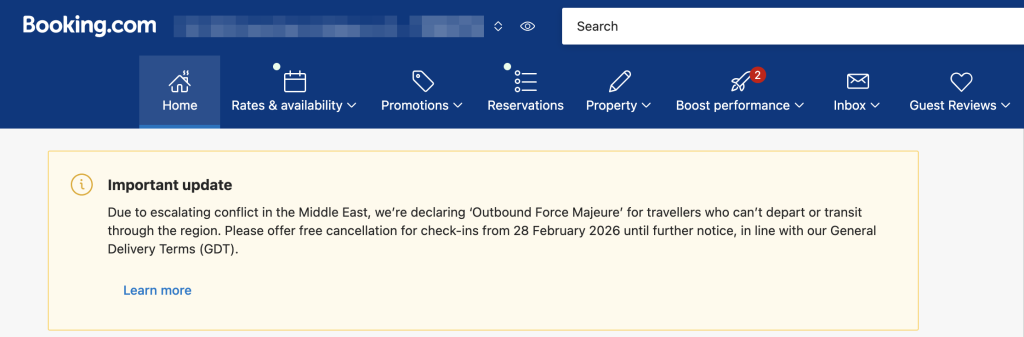
Airbnb's Major Disruptive Events Policy kicks in at this time - other channels have similar policies. Since "hurricanes in Florida during hurricane season" are foreseeable weather conditions, hosts and guests can not cancel penalty-free. However, when this policy is in effect, "guests can cancel their reservation and receive a refund, travel credit, and/or other consideration regardless of the reservation’s cancellation policy, and hosts can cancel without fees or other adverse consequences, although their listing’s calendar will be blocked for the dates of the canceled reservation." With a storm bearing down on you, the blocked calendar is the least of your worries.
Other channels have similar policies:
Phase 3: The Command Level (Training & Certifications)
After three decades in Miami, my wife and I do not view major storms solely through the lens of property management. As a certified emergency medical responder and active member of CERT (Community Emergency Response Team), I operate under a fundamental rule: unprepared volunteers quickly become additional liabilities.
When a major storm hits, you cannot rely on guesswork. You need a baseline set of skills to protect your family, your community, and your assets before professional emergency services can respond. And the last thing you want to worry about is your guests' safety.
Every professional operating a short-term rental business in a high-risk weather zone should carry three baseline credentials:
- CPR and Basic First Aid: The absolute minimum standard. When emergency services are temporarily suspended during peak storm conditions, you are the immediate first responder for anyone in your vicinity.
- Stop the Bleed Training: A vital national course teaching immediate trauma intervention. In a major hurricane, structural failures and flying debris cause severe injuries that must be stabilized before professional medical units can arrive.
- CERT Certification: Although optional, joining your local Citizens Emergency Response Team provides formal education in disaster mechanics, light search and rescue, utility controls, and incident command structures.
Establish Your Operational Limits
Owning an asset does not make you a first responder. A dangerous mistake hosts make is attempting physical recovery actions they are entirely unqualified to handle.
Do not clear debris with a chainsaw if you have not been formally trained; fallen trees can be under intense mechanical tension and can snap back with lethal force. Do not wade through flooded streets to check a property. Your objective during a crisis is logistical command and control, not hazardous labor. Secure your people, coordinate evacuations using verified data, and leave the physical recovery to trained professionals.
Phase 4: The Security Vulnerability & Digital Redundancy
There is a critical security vulnerability within disaster management that is rarely discussed in the hospitality industry: the increased risk of human trafficking in the wake of a crisis.
When a major hurricane disrupts public infrastructure, causing power outages, disabling communication lines, and diverting law enforcement entirely to life-safety rescue operations, neighborhoods become dark and deserted. Traffickers actively exploit these vulnerabilities. The confusion of mass evacuations, displaced local families, and unmonitored properties creates an ideal cover for moving and exploiting victims.
As short-term rental operators in neighborhoods like El Portal and Miami Shores, we serve as the frontline gatekeepers. If properties are left vacant, unmonitored, or booked blindly during a post-storm scramble, we leave our communities vulnerable to exploitation.
Geographically Distributed Tech Stacks
This risk highlights why our rigorous, year-round guest screening process is mandatory, and its importance is magnified during a storm crisis. We partner with Truvi to continuously verify the digital identity and background of every guest who books our properties.
Resilience means decoupling software infrastructure from physical locations. Because our tech stack, including our Property Management System (PMS) and our guest verification via Truvi, is cloud-based and geographically distributed outside of the storm zone, our digital business systems remain 100% active and online, even if our physical market is completely blacked out. Guests may not book in the immediate aftermath of the storm, but they may want to stay in your place in a few months.
When a crisis hits, and manual operations are strained, you cannot afford to drop your guard. Traffickers frequently use the cover of a disaster to request immediate, last-minute housing, often pushing for cash transactions, booking under aliases, or refusing to provide verified identification. By maintaining an uncompromising verification standard through Truvi, even during storm disruptions, you ensure your properties are never weaponized by criminal networks.
Securing the Local Hardware Gateway
While your software stack is safe in the cloud, your on-the-ground gateway is highly vulnerable. If the power cuts, your smart locks, exterior security cameras, and alarm systems can go completely blind, leaving your asset unmonitored.
To maintain security command during a grid failure, your physical property infrastructure requires built-in hardware redundancy:
- Uninterruptible Power Supplies (UPS): Your primary internet routers and smart home hubs should always be plugged into dedicated UPS battery backups to keep the local network alive during transient power blips.
- Secondary Off-Grid Wi-Fi: Implementing a secondary, satellite-based internet provider like Starlink, powered by a small solar generator or dedicated battery, ensures your exterior security cameras stay connected to the cloud even if local fiber lines are physically severed.
- Cellular Alarm Backups: Ensure your property's security and fire alarms utilize a cellular backup system that doesn't rely on local landlines or standard internet to transmit emergency alerts.
Your Legal and Ethical Mandate
Security requires active enforcement. For over ten years, my wife and I have been directly involved in international anti-human trafficking training and interdiction, and for the past two years, we have focused heavily on implementing these operational protections at our listings and introducing them to short-term rental hosts.
When ECPAT, the global network of civil society organizations dedicated to ending the sexual exploitation of children, developed its specialized Child Protection Course for short-term rental hosts in the United States, we were proud to support the launch. We served on the initial development focus group, tested its functionality, and participated as launch speakers to introduce it to the community. When we submitted the curriculum to the DBPR and found it fell short of the state's licensing criteria, we worked with ECPAT to expand the course materials to fully meet Florida's compliance mandates.
As a result of our direct push, the course was officially accredited by the Florida Department of Business and Professional Regulation (DBPR). Today, this rewritten curriculum satisfies the mandatory annual human trafficking awareness training requirement that all Florida hosts must complete each year to maintain their DBPR hospitality license statewide.
Operating as a serious host means understanding how to secure your property against physical hazards and human exploitation. Maintaining your DBPR license isn't just about complying with State regulations; it is an ethical obligation to protect the neighborhood where you do business.
Essential Emergency Resources
Bookmark these official websites to monitor up-to-the-minute data and verify county directives:
- Zone Verification: Florida Disaster - Know Your Zone (Verify your specific evacuation zone criteria).
- Local Directives: Miami-Dade County Emergency Management (The definitive source for local shelter openings and mandatory evacuation orders).
- Meteorological Analysis: National Hurricane Center (NHC) (For official track models, watches, and warnings) and Tropical Updates
- Power Outage Reporting: Florida Power & Light (FPL) at 1-800-4-OUTAGE (1-800-468-8243) or via the FPL Power Tracker.
Looking Forward
Once you have established your on-the-ground operational training and secured your digital tech stack against a crisis, you must create a financially resilient business.
In "Self-Reliant Host", the third post of our four-part series, we'll look at how short-term rental hosts build family self-reliance and use layered redundancy, P.A.C.E. planning, and forensic accounting to protect business equity.