The Self-Reliant Host
Strategic Home Planning, Operational Redundancy, and Asset Protection
True business resilience is more than knowing the platform cancellation rules and securing your listing. In the short-term rental industry, many operators treat hurricane preparation purely as a property management task, a last-minute scramble to secure patio furniture and refresh their understanding of the booking sites’ disruptive events policies. This is a critical operational mistake.
If a major storm cycles into South Florida, your portfolio cannot function if your command center is compromised. A host's ability to run their short-term vacation rental business depends entirely on an absolute hierarchy of preparation: first, the survival and security of your household; second, the activation of local community support; and third, the defense of your business equity and insurance infrastructure. Long before a tropical system develops in the Atlantic, a serious host must build a comprehensive defensive strategy that links personal survival to sound corporate accounting.
The Hierarchy of Survival: Family and Household First
My training in emergency medical response and time spent with the Community Emergency Response Team (CERT) taught me a non-negotiable law: scene safety is paramount. Unprepared volunteers quickly become additional liabilities. You are of no use to your neighborhood, your community, or your business if you are injured, compromised, or treating your own household as an active emergency zone. Your family is your absolute priority. Only after they are 100% safe, secure, and supplied can you look outward.
FEMA establishes a minimum baseline standard requiring citizens to be self-sufficient for 72 hours. In a disastrous grid-down scenario, 72 hours is a conservative minimum. True asset protection means preparing your primary residence to withstand a prolonged infrastructure failure where emergency services are suspended, roads are impassable, and resources are strictly rationed. If you’ve lived in Florida for any length of time, you’ll agree - we’ve lived through days and weeks of electrical outages a couple of times already.
To protect your home and family, your personal preparation must be systematically organized around the core pillars of household survival.
Food Security and Logistics
Store at least two weeks' worth of non-perishable, nutrient-dense food. A common mistake is buying emergency rations your family never eats, which adds unnecessary psychological stress during an already tense crisis. Stock foods that you normally eat.
You must understand your inventory limits. If you have carefully stored two weeks of food for two people, attempting to feed an additional neighboring family of four instantly cuts your survival runway down to less than four days. True self-reliance requires a careful, calculated approach to your resources.
Layered Water Reserves and Sanitation Requirements
Water is both a strict hydration requirement and a baseline sanitation necessity. Secure your supply through layered redundancy. Store clean drinking water using dedicated, food-grade five-gallon camping bladders. When a storm approaches, fill these bladders and store them securely inside your bathtubs to maximize your volume while keeping them protected. Remember that after a storm, water may not be drinkable without some sort of treatment.
Beyond drinking water, calculate the severe resource weight of sanitation. When municipal water lines lose pressure, toilets will not flush. Maintain separate greywater reserves, such as rain barrels or large, filled utility containers, specifically for manually cycling toilets and maintaining basic hygiene to prevent disease transmission.
Targeted Energy Footprints and Grid-Down Realities
Dealing with a prolonged grid-down scenario after a storm requires thinking outside the box. Even a temporary infrastructure collapse can mean losing air conditioning, refrigeration, the ability to use your stove, and communication lines. You cannot run a central residential HVAC system on a standard portable generator, which means confronting the grueling reality of intense South Florida heat without climate control.
Instead of planning for absolute comfort, design targeted energy footprints. Maintain a fleet of dedicated fuel canisters for both your vehicles and your generator, ensuring fuel is stabilized and rotated. Use your generator strategically to keep refrigeration online and prevent food spoilage, rather than wasting energy on non-essential appliances.
For off-grid cooking, verify your fuel and propane reserves for outdoor grills or camp stoves well in advance. Ensure you have simple, non-electrical hardware, such as a standard stovetop percolator or a basic camping pot, to make coffee and cook meals when the microwave and stove are completely dead. The time to work through these logistics is now, not after a storm when roads are impassable, supplies are limited, and gas is rationed.
Cell phones will probably be your only way to communicate. Make sure you have portable batteries that are charged and a way to recharge them without electricity.
Shelter Integrity, Medical Preparedness, and Psychological Morale
Your primary residence must serve as an active protection against extreme meteorological conditions. This requires verifying the integrity of your home's physical envelope long before the season begins. Ensure impact-rated windows are free of structural defects, shutter hardware is organized and accessible, and vulnerable entry points are mechanically reinforced.
When standard municipal services are offline, minor medical issues can quickly turn into severe health crises. Maintain an advanced first-aid kit stocked with trauma supplies, tourniquets, and a sufficient supply of essential family medications. And train how to use it - having a trauma dressing on hand is not the same as knowing how to use it correctly.
Finally, do not underestimate the impact of morale in a prolonged crisis. When the internet is down and device batteries are low, simple comfort items keep your household grounded. Stock board games, physical books, cards, and specialized comfort items for children. Maintaining small routines, like brewing a morning coffee over a gas burner, works as a vital anchor to reality.
Operational Redundancy and Scene Safety
Surviving the aftermath of a major storm requires shifting from static checklists to dynamic, operational concepts. Advanced emergency management relies on two core tactical frameworks: Scene Safety/Personal Protective Equipment (PPE) and the military P.A.C.E. Planning Matrix.
Medical response courses drill the absolute necessity of PPE and scene safety. You never attempt to help a victim or clear a path if doing so would put you in danger. If you get hurt, you immediately exhaust local resources and become a burden to an already strained system. This requirement translates directly into your personal protective equipment during on-the-ground restoration efforts. Just as you utilize medical gloves and masks for trauma care, you must wear proper gear for physical labor.
You do not operate a chainsaw or clear heavy storm debris in standard casual clothing or swim trunks. Your post-storm restoration uniform requires heavy-duty work pants, long-sleeved shirts, steel-toe or puncture-resistant boots, eye and ear protection, and a set of tough work gloves. Additionally, during a torrential rainstorm, staying dry is vital to sustaining core body temperature and focus. High-grade waterproof outerwear, such as a breathable Gore-Tex rain jacket and insulated rubber boots, is essential when you venture outside.
To complement physical safety, a professional host must build strict communication redundancy by establishing a P.A.C.E. plan. Derived from military operational doctrine, this matrix utilizes four separate versions to accomplish a single critical task:
[P] Primary ──> [A] Alternate ──> [C] Contingency ──> [E] Emergency
To understand this matrix, look at how a professional host structures tactical communications when regional cell towers are damaged or overwhelmed:
- Primary (P): Standard cellular voice communication. This is your preferred, most efficient method under normal operating conditions.
- Alternate (A): Cellular text messaging or encrypted SMS applications. Cellular data pipelines and SMS queues operate on completely different network protocols than voice networks. When voice circuits are congested, a text message can frequently find a window to slip through when a call cannot.
- Contingency (C): Handheld two-way radios, such as GMRS or localized UHF/VHF radios. This tier completely decouples your operations from commercial cellular networks, allowing you to maintain direct, line-of-sight communication with your family and immediate neighbors.
- Emergency (E): The absolute last resort when all digital and radio communication arrays go completely dark. This requires taking the time now to think through other options, such as pre-arranging physical rally points, using written messages left at designated static locations, or deploying a physical runner throughout the neighborhood.
By applying this P.A.C.E. framework to every core need, including power generation, water collection, and asset tracking, you ensure your command center remains operational even in the event of local system failures.
The Limits of Civic Responsibility
Once your household is secure, your family is safe, and your P.A.C.E. plans are active, you can transition into supporting your immediate neighborhood. However, effective civic leadership requires absolute clarity regarding your personal and operational limitations.
Understand your limitations. If you are not formally trained and properly qualified to handle a crisis, the safest operational choice is to remain at your home. Attempting complex physical interventions without technical training can create new emergencies for an already strained rescue system.
If you want to learn more and expand your capability to protect your community, actively seek out proper training before the storm season begins. Join your local Citizens Emergency Response Team (CERT) to learn disaster mechanics, utility controls, and light search and rescue. Take a vetted Stop the Bleed course, and learn First Aid and CPR. In a severe regional crisis, you may be the first responder in an emergency. You may be the only one. Ensure you have the technical capability to back up your eagerness to help.
Financial Fortitude and Asset Defense
Only when your home and family are fully insulated can you safely turn your focus to the secondary battlefield: defending your rental portfolio against the corporate chaos of post-storm recovery. When an entire region suffers a major impact, the corporate recovery landscape is brutal. Insurance companies will be instantly overwhelmed, adjusters will be swamped with thousands of competing appointments, and underwriting teams will carefully look for any contractual reason to deny coverage. To protect your equity, you must execute a flawless financial defense strategy well in advance.
The Pre-Season Forensic Video Audit
Insurance companies will look for any reason to deny or minimize your claim, and adjusters routinely attempt to attribute legitimate storm damage to pre-existing wear and tear or deferred maintenance. To defeat this underwriting trap, you must be able to definitively prove the pre-storm conditions of the property.
By June 1st each year or as soon as you possibly can, execute a continuous, high-definition video walkthrough of your entire asset. This must be a single, uninterrupted recording that records the exact condition of the roof, major mechanical systems, electrical panels, and all interior finishes. Store this digital file securely in a decentralized cloud architecture entirely outside your local geographic area.
Eliminating Licensing and Policy Loopholes
Vigilant compliance with compliance regulations forms your frontline legal shield. If you are running an unlicensed short-term rental, or if your local municipal permits are non-compliant, underwriters will immediately use that regulatory failure to deny your claim entirely during a disaster audit.
Furthermore, if you have a policy that doesn't explicitly include your short-term rental business, your coverage can be completely voided upon inspection. Verify your regulatory standing with the state and your local municipality, and audit your insurance lines to confirm your policy matches your exact business model. The Florida Alliance of Vacation Rentals (FAVR) is a great resource to learn about required compliance.
Avoiding the Business Interruption Trap
Physical property damage is only one component of a disaster; the loss of ongoing cash flow during a peak market cycle can devastate a hospitality business. Business interruption insurance is designed to cover what you would have made in the time your business cannot host guests, but claims adjusters require rigorous documentation to approve payouts.
Your bookkeeping needs to be able to prove what your income would have been based on your historical records, seasonal market compression, and established booking rates. If your financial records are unorganized, underwriters will calculate your losses using flat annual averages and low off-season historical baselines, underpaying your business by thousands. Maintain precise, localized historical data sheets and keep copies of all active policy documentation safely stored, digitized, and ready for immediate deployment.
Action Plan: Establish Your Readiness
True capital preservation requires immediate, proactive execution. The time to audit your insurance policies, organize your forensic accounting data, and stock your household survival inventory is right now, not when an active tracking model enters the local forecast.
Use these resources to verify your compliance, understand your local risk factors, and organize your household emergency infrastructure:
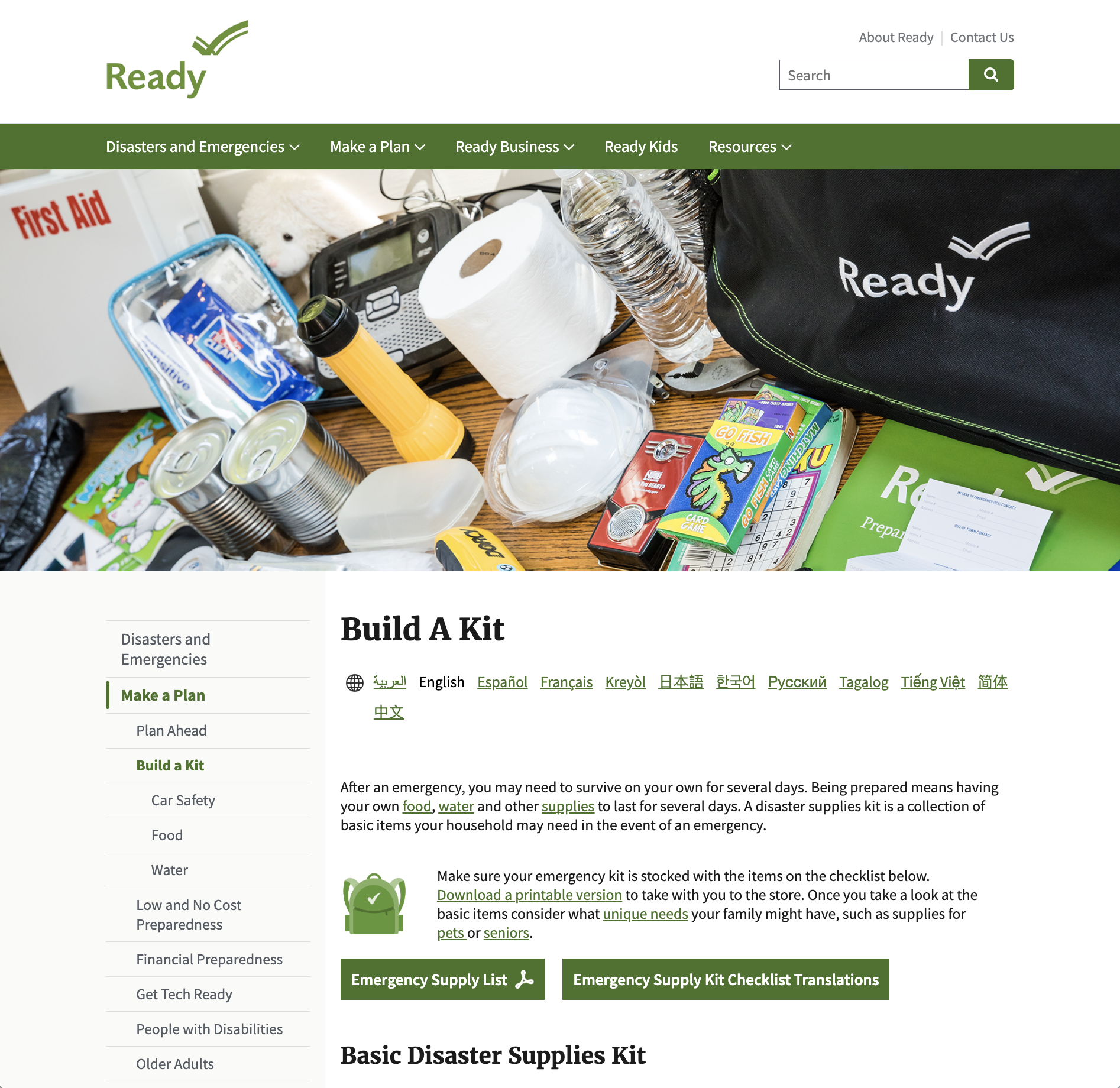
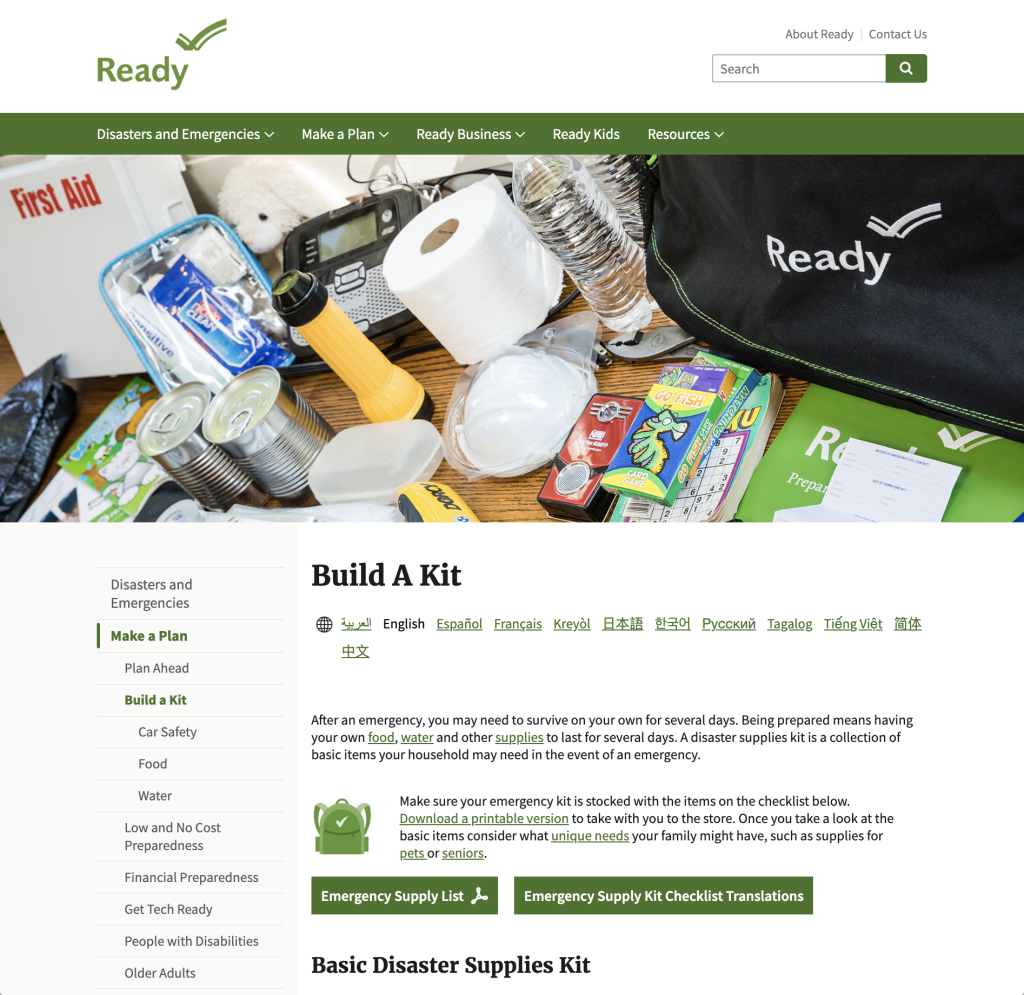
- Household Readiness and Supply Planning: FEMA Ready.gov Emergency Preparedness
- Evacuation Zone and Local Hazard Verification: Florida Disaster: Know Your Zone Directory
- Trauma Response and Medical Preparedness: National Stop the Bleed Program
- Community Emergency Training and Certification: FEMA Community Emergency Response Team (CERT)
- Florida Licensing and Compliance Verification: Florida Department of Business and Professional Regulation (DBPR)
In the final article, we will look at how you can partner with Airbnb. org to help them in their mission to provide safe, emergency short-term housing for families and first responders affected by natural disasters, such as hurricanes, floods, and earthquakes.