There Is No More Page 2
How AI Search Is Rewriting the Rules for Vacation Rental Hosts
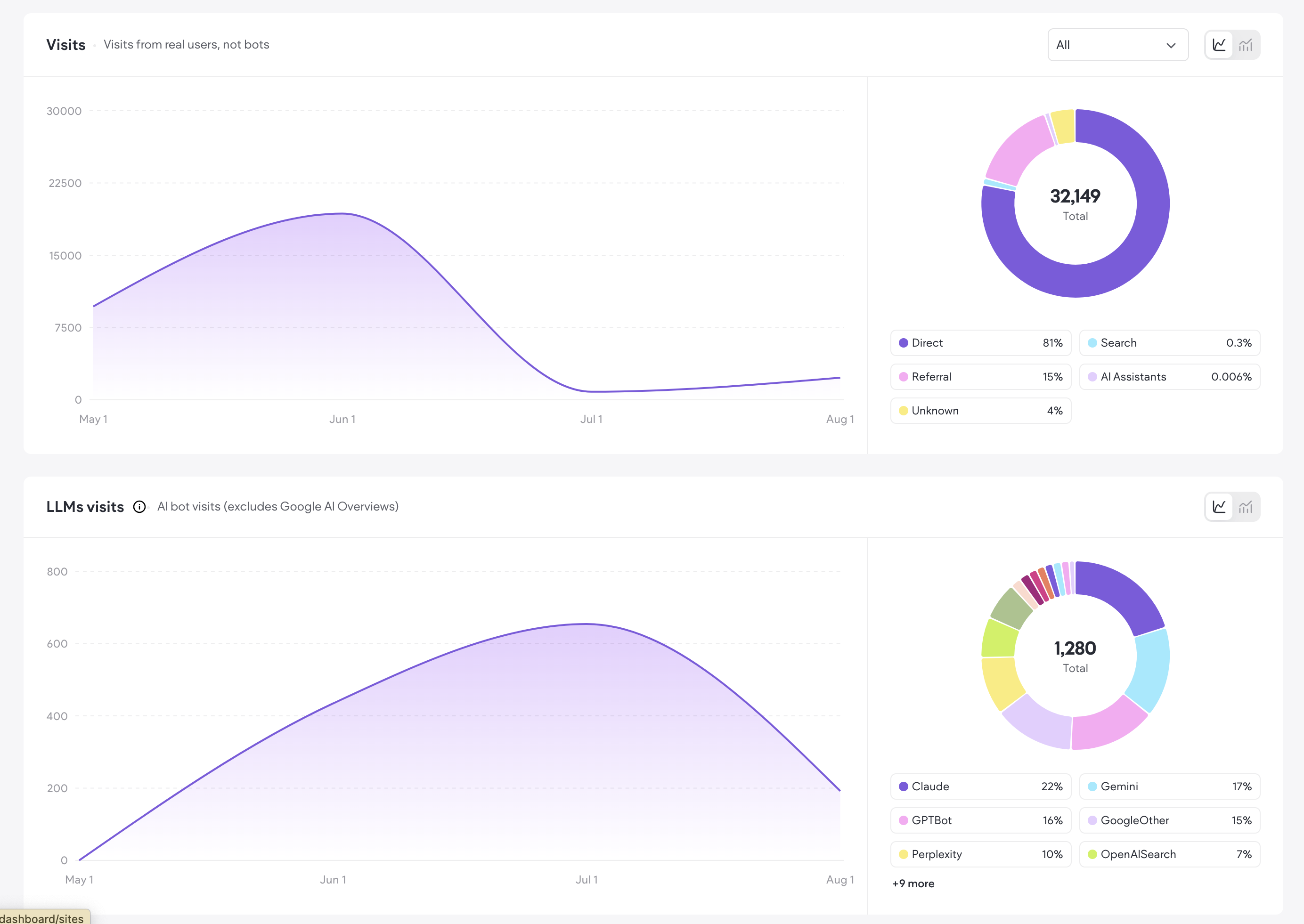
We are constantly testing new ways to market our short-term rental business. An essential part of that trial and error is measuring results. Recently, while reviewing our website traffic, I was surprised to find two distinct graphs: one tracking human visitors, and a second one counting AI bot visits.
We launched our new AI-optimized direct booking website earlier this spring. Before that, zero AI bots crawled our online storefront.
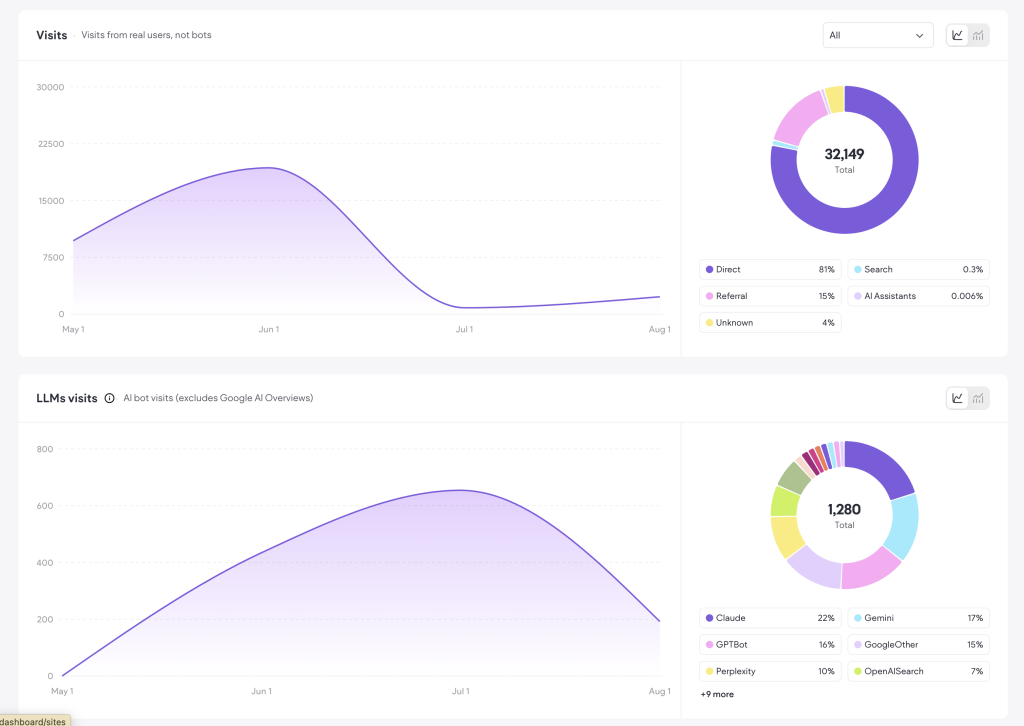
To keep things in perspective, for every 100 humans that visit our site, roughly 3 AI bots scour our data. Yet, in the last 90 days alone, over 1,200 AI bots have crawled our pages looking for a great place to stay in Miami. Behind each one of those automated queries is a traveler looking for a tailored lodging experience.
You have almost certainly used AI yourself in the past few months. Perhaps you used it to research a destination, draft a spreadsheet automation, condense information, or generate an image.
Now, travelers are using it to find their next vacation rental. They are bypassing traditional search engines and OTAs entirely, instructing AI to find a rental matching their exact parameters, desired amenities, and group size.
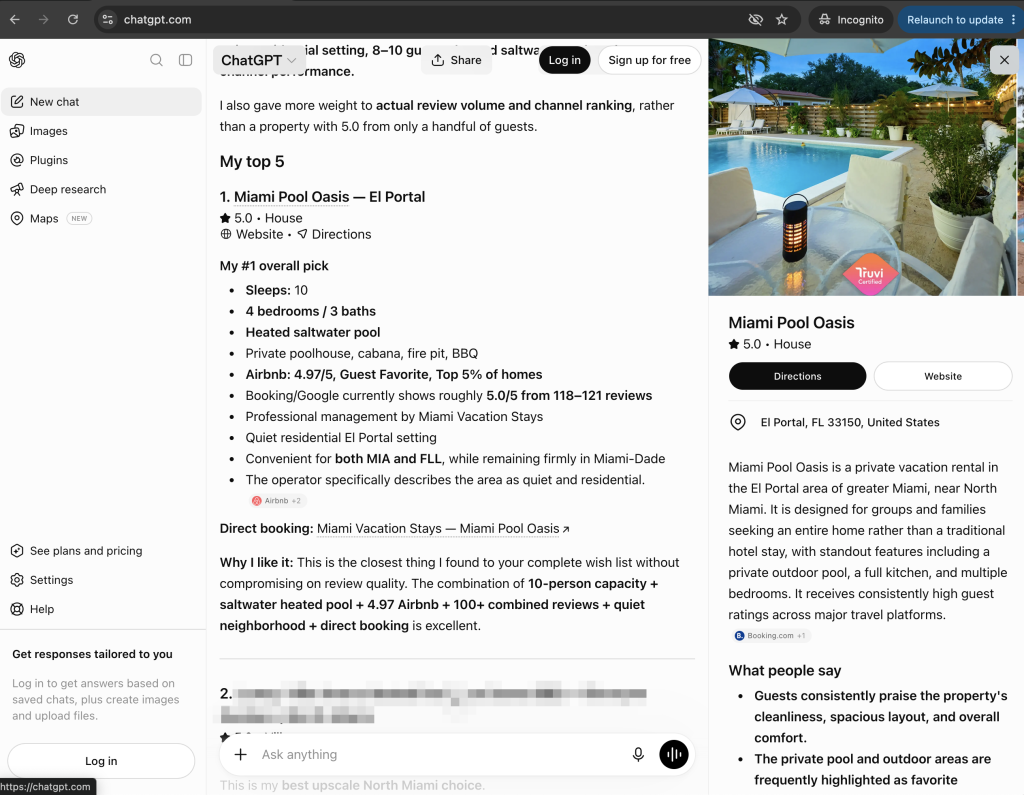
Yesterday, I wrote a prompt for a group stay in Miami matching our property’s profile, with specific amenities and quality standards. ChatGPT returned our listing as the top recommendation out of five. To maintain full transparency, Gemini did not recommend our home, though Google Search's AI overview did.
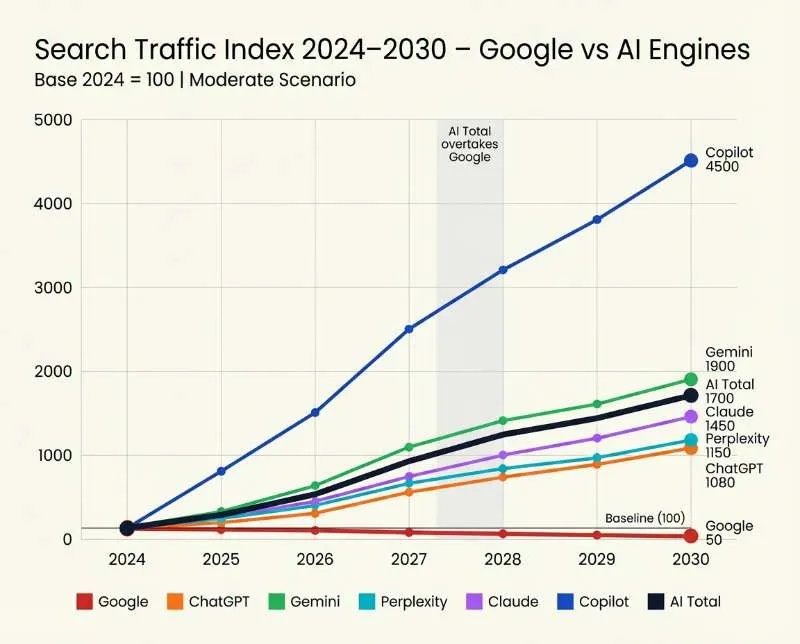
My query underscores a profound behavioral shift among guests. One of the most consequential changes in online discovery this decade was the launch of ChatGPT in 2022, with conversational AI search predicted to surpass traditional search engines by 2030.
For hosts managing small portfolios of a handful of properties, the rules of visibility have fundamentally changed. Traditional search engines rank keywords; AI models look for intent and consensus across the web.
To ensure your listing is selected among the handful of suggestions AI delivers, you must adapt to two critical shifts.
1. Expand Your Digital Footprint
Relying on a single platform is no longer viable. Hosting has evolved past the era of snapping a few smartphone photos, writing a brief description, and watching bookings roll in.
No single channel commands a monopoly on traveler attention. In Miami, Airbnb captures roughly 60% of inbound guests in the South Florida market; it’s closer to 40% in the US. That means if you rely solely on Airbnb, two out of five potential guests never see your property, regardless of your ranking on the platform.
To build the cross-platform validation that AI algorithms favor, focus on three pillars:
- Diversify Across Channels: If you are exclusively on Airbnb, expand to VRBO. Over the past year, Expedia Group has successfully positioned VRBO as the clear second-largest OTA in the United States, with a setup process familiar to Airbnb hosts. Booking.com presents a much steeper onboarding curve; you need patience and solid infrastructure, like a great PMS (Property Management System), to add your listing there.
- Build off-site Citations: Because AI models look for web-wide agreement, mentions on social media, local press, community forums, and awards validate your property in algorithms far more effectively than a single OTA listing. And yet over 80% of Airbnb hosts don’t list anywhere else.
- Treat Reviews as Paramount: AI looks for data that captures how guests actually felt about their stay, such as ratings, host status, and property placement that serve as social proof. Resting on the laurels of past reviews is no longer an option; you must ensure your listing ranks at the top across all channels.
2. Optimize Your Direct Booking Website for AI
When travelers search via AI, they are not browsing through ten pages of search results. There is no "Page 2" in conversational search. AI delivers a curated handful of direct answers; your listing is either suggested, or it isn't.
- Create Local Content: AI values hyper-local authority. Write about your immediate neighborhood, your favorite dining spots, and places you love so AI cites you as a regional expert. Use your FAQ section to answer detailed questions about your property's layout, where to park, and how far your home is to attractions.
- Write Specific Copy: Phrases like "tropical oasis" are useless to AI, especially in Miami. Instead, include details of specific amenities like "high-speed dedicated fiber internet" or a "heated saltwater pool" that matching algorithms can parse and match to precise prompts.
- Implement Schema Markup: Utilize a website builder optimized for AEO (Answer Engine Optimization), the successor to traditional SEO. Structured data allows AI to instantly recognize your business name, address, cancellation policies, and inventory without guessing.
The online front door to vacation rentals has shifted forever. By not chasing the OTAs and instead building an AI-readable short-term vacation rental brand, even small hosts can ensure they aren't just found - but recommended.