12 Off-Season Moves to Supercharge Your Hosting Business
Summer 2026 has been brutal for Miami's short-term vacation rental market.
The sharp dip in mid-July through August was a surprise and, as I wrote a few weeks ago, September and October are always slow in Miami. Despite this dip, we can count ourselves fortunate: Miami’s market occupancy drops to the low 40%, whereas other, more seasonal markets, like Sardinia in Italy, go much, much lower. (More on that later; read #11 - I’ll share how our listings are doing.)
The 12 Off-Season moves
Here are 12 concrete actions to take in slow season (and no, whining about how bad it is in the Fall is not one of them). All of them focus on super-charging your short-term vacation rental business, so you can hit the ground running in November, when high season starts up again:
- Deep clean your listing: Take a day and go through it with a fine-tooth comb, pull out the fridge (clean the coils while you’re at it; it’s good preventative maintenance), pull couches off the walls, and clean where the cleaners usually don’t get. Pressure-wash outside and clean the windows; you know, get to the tasks that there’s normally no time for.
- Schedule major renovations: One of our listings had a roof that was over 80 years old. They sure don’t make them like they used to, and it had to be replaced. Slow season is the perfect time to schedule big renovations, when the noise, dust, and debris don’t bother guests because bookings have slowed to a crawl. I’d much rather pause a listing when revenue is at a minimum than risk peak earnings during our high season.
- Inventory your amenities: Spoons tend to disappear, and you can’t advertise a listing that sleeps ten with 4 forks, 8 spoons, and 6 knives. Count them (and while you’ve got it out of the drawer, clean that too - I bet your cleaners haven’t touched that in months; see #1). Same goes for cups, plates, pots & pans - you get the point. It’s also a great time to double-check your listing to make sure all the amenities you have are listed (platforms sometimes add more options) and that none are offered that you don’t have; Airbnb added a hot tub to one of our places for a while a couple of years ago.
- Create new photography: Listings need updating from time to time; furniture gets replaced, plants fill in, and we switched from flat sheets and coverlets to cooling duvets. All of that needs fresh photography. And since you deep-cleaned the home (right?) and the renovations are finished, you need new photography.
- Attend an STR conference: Industry insiders call fall ‘conference season’, so why not take a few days and go to a vacation rental conference. FAVR (the Florida Alliance of Vacation Rentals) is having their annual conference in a few weeks in Orlando, and Hostaway (our PMS) is holding its user conference in Tampa in November - Jacomina and I are going to both; say hi if you’re coming too. Get inspired, learn something new, meet other hosts and vendors. We’ll see you there.
- Go on vacation: Hosting is a lot of physical and mental work. Between managing your listing and hosting guests, it takes a lot out of us. Don’t get me wrong, we love hospitality, but at the end of the day, it’s tiring.
Go on a vacation. Take a few days to rejuvenate, recharge, and refresh. Heck, take a week or more. And if you don’t think you can afford it, read action item #12 to learn how to pay for your stay - it’s the best-kept secret on this whole list :) Bonus points if you book another short-term rental and observe how the host communicates before your check-in, how the listing is styled and prepped, and how they treat you as a guest. You can probably learn something. - Study lessons learned and financial data: The famous philosopher George Santayana wrote: "Those who cannot remember the past are condemned to repeat it." That sentiment applies to short-term vacation rental businesses, too. Use these quiet days to take stock of what you’ve learned over the past year. Special Forces call this the OODA loop: observe, orient, decide, act. The loop means doing it all over again. And again.
What worked really well? Where did you screw up? Which factors influenced your decisions and guest behavior? What worked well? When did guests book? When did guests rave about something about your listing? Why did others complain?
Watch, Learn, Improve, Execute, Repeat. - Review your tech stack: Airbnb is constantly developing tools for hosts to use, from price tips and seasonal cancellation policies to guest messaging, its listing editor, and hosting insights - all tools created for you to run a better business. Take time to understand how to use these tools.
Some of us want more data and tighter control, so we build a software stack: external software products that work with Airbnb, like dynamic pricing software, property management systems (PMS), noise monitors, and other products that make hosting more seamless and integrated.
Learn a new Airbnb tool or reevaluate your tech stack, ditch the outdated products, and try our new ones. Test automations you’ve created and fine-tune those that failed. It’s the perfect time to roll up your digital sleeves and get your hands dirty under the hood, so to speak, and fine-tune your business to purr along smoothly once the season's bookings roll in a few weeks. - Explore alternative listing channels: I’m probably going to get in trouble for sharing this next step, but Miami market data shows Airbnb leads South Florida in listings, with 60% market share. That’s a massive pool of potential guests, but it also means that 4 out of 10 potential guests booking a stay here are looking at other channels. (If you can afford to ignore 40% of potential bookings, more power to you; I know we don’t).
Use this downtime to explore other places to advertise your listing to a new set of guests. In our experience, adding another channel doesn't cannibalize Airbnb bookings; it simply adds more reservations you are missing today. - Conduct a guest feedback audit: You should be mining your guest reviews; we’ve gotten some of our best ideas from guest suggestions. We read every review and tabulate what guests consistently mention (spoiler alert: over 94% mention our hospitality).
When bookings slow down, you can grab a cup of coffee and read over reviews and the past year's guest messages to see where you can improve and do better. It’s invaluable information. (Here’s where external software comes in handy; our PMS (HostAway) has an AI that aggregates review and guest message information. It’s a goldmine for improving our hosting game. - Audit dynamic pricing rules:
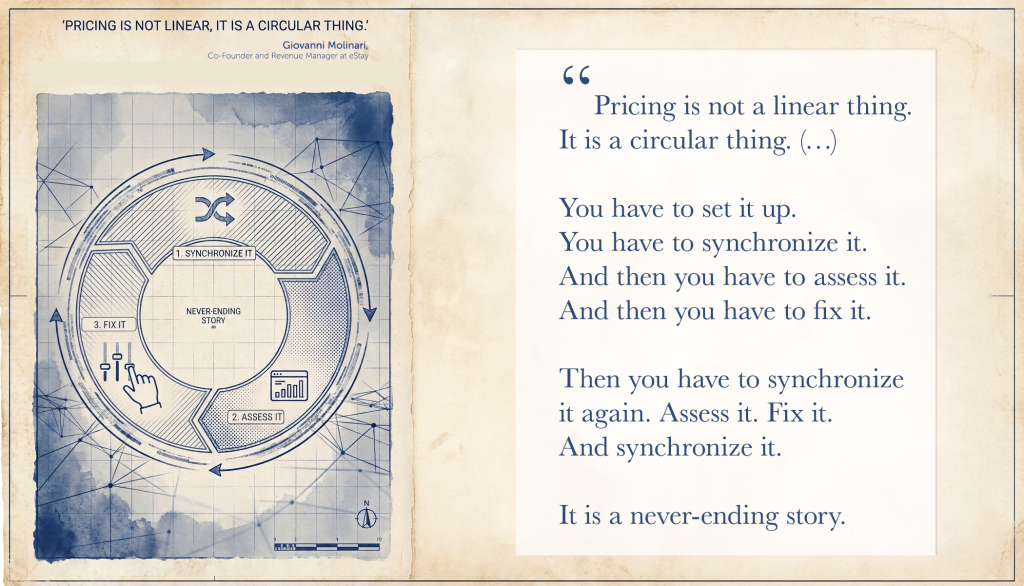
Part of running a successful business is testing. How can your listing perform better? Will a new title make a difference, or does the description need updating? I recently heard a great podcast from our friends at PriceLabs, where they interviewed a property manager from Sardinia. This island off the coast of Italy’s season is nothing like the season we have here in Miami. During their slow season, occupancy on the island drops to less than 20%. But I perked up when Giovanni from eStay said. - Welcome HomeExchange guests: Let people stay in your home for free. Yes, you read that correctly.
There is a channel called HomeExchange, where guests pay with points to stay at your home. Hey, noone’s paying for a stay in September and October anyway, right? So why not use the points you earn to book the place you stay at when you’re attending the next conference (we’re doing that in Orlando) or, even better yet, save up enough points to book a place to stay for your next vacation? That’s where we started this whole journey.
All of a sudden, that apartment on the Piazza San Marco in Venice, or the house built into the jungle in Costa Rica, sounds like an amazing location to reflect on how your short-term rental business did when you sit down in the slow season of 2027.
When you do, send us a postcard.