
News & Strategy Insights
This page is not a comprehensive digest of industry news, but rather highlights some stories we find interesting. We'll share our take on the news and talk about how we see these stories impacting our business.
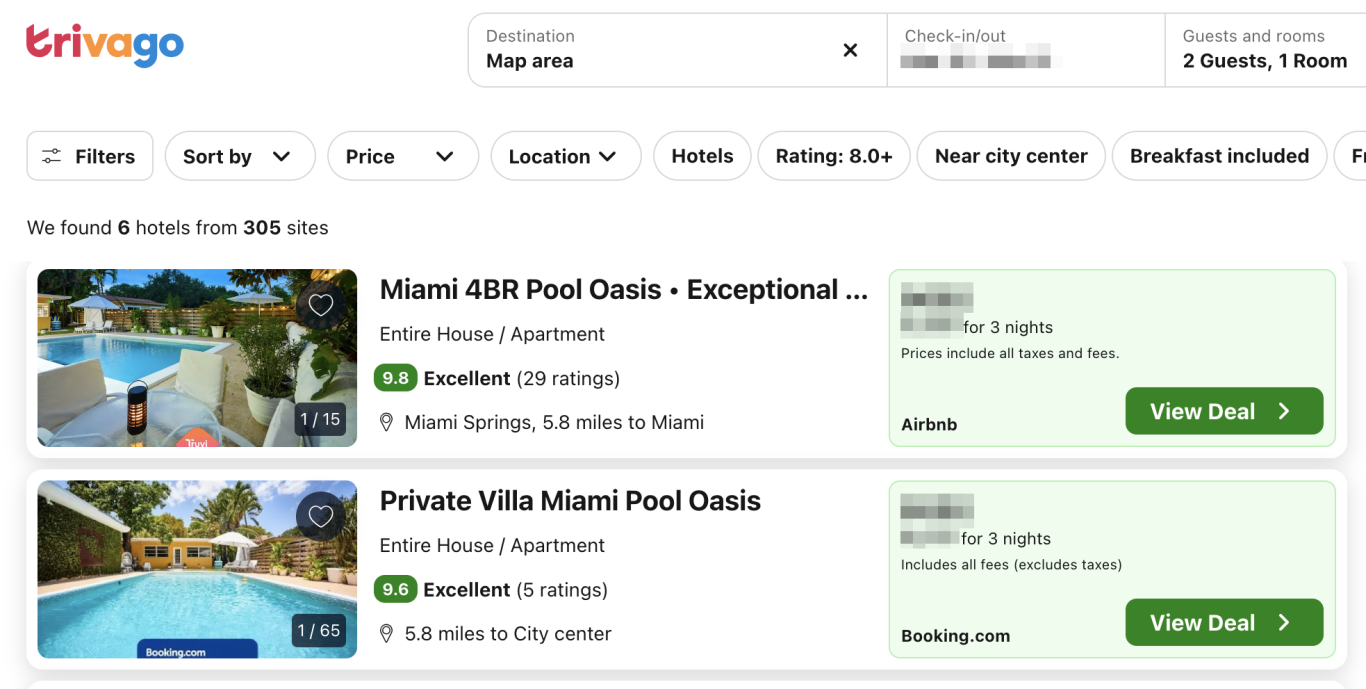
Airbnb now advertises listings on Trivago
Miami, FL Feb 2026
Airbnb is now listing its homes on Trivago, a platform owned by Expedia, which is VRBO's parent company. For those of you who don't know, Trivago is a leading global metasearch engine and online accommodation platform that compares prices for hotels and rentals from hundreds of booking sites.
And while Booking.com, VRBO, and other platforms have advertised their listings on trivago for years, Airbnb just recently joined the fray. This confirms a conversation we had with the CEO of a top Property Management System (PMS) over dinner, a few days ago. He says that Online Travel Agencies (OTAs), like Airbnb, are really only marketing agencies for our Short-Term Vacation Rental listings, since they don't own the inventory or control the guest experience. He used an example of a SuperBowl ad:
"The OTAs know who's watching the game. They know how old the viewer is, his socioeconomic background, etc and the only thing they need to figure out, is if they can make more money from the reservation that Ad campain will drive, than it cost them to air the ad."
Seeing our listings from different platforms directly on top of each other on trivago drives this point home. I'm sure that Airbnb, Booking.com, and the others are paying for that placement. The only thing they need to figure out is if they can make more money on the commission they charge us than it costs to advertise on this search engine.

Miami, FL Feb 2026
Have you noticed the seemingly small changes creeping into your Short-Term Vacation Rental (STR) listing in 2025?
At first, they might have seemed minor—on some platforms, it felt like there was a new tweak every few months. Some adjustments were familiar, others required adaptation, and more than a few likely slipped under your radar.
Yet what began as a series of harmless flurries has now built into a sudden, sweeping avalanche, and if you haven’t adapted, your revenue is likely already feeling the chill.
Growing Competition
The first is something that’s been going on for a while now: increased supply. According to our PriceLabs market data, the Miami market saw a 19% increase in new listings in the last 365 days.
One Price Policy
The second shift occurred in the early Summer of 2025, as many short-term vacation rental channels switched to what Airbnb calls the “One Price Policy” in response to a new Federal Trade Commission rule. Guests now see only one price that includes all mandatory fees, except taxes.
Host Fee Increase
In October of last year, Airbnb introduced a 15.5% host fee for all professional hosts, although if you’re not software-connected, you can still choose to have your guest pay the majority of Airbnb’s fee. At least for now …
New Cancellation Policies
Finally, a few days before raising the host fee to 15.5%, Airbnb changed its cancellation policies, removing the strict option but quietly making other, more important, changes to all other cancellation options.
They Look Like Minor Tweaks—Until They Bury You in an Avalanche
You might be thinking: So what? There’s nothing I can do about rising competition except lower my prices. (If that’s your mindset, you’re mistaken on both fronts—and you’re likely focusing on the wrong metrics.)
And the One Price Policy? It may seem inconsequential—after all, guests were already used to seeing the total price before booking. (In reality, the policy’s impact is far greater than you might assume.)
Maybe you’re worried the fee increase will make your listing unaffordable and hurt your business. (But that’s only true if you don’t understand how to navigate it. We’ve managed the new fee structure successfully for a year before it became mandatory—see also the One Price Policy, as the two are closely linked.)
And as for cancellation policies, maybe you’ve heard that you should always choose the most lenient option to boost your search ranking. But remember, no one outside Airbnb knows exactly how the algorithm works or how data points are weighted. (There’s far more nuance to selecting the right cancellation policy—it depends on your market, season, and booking window. See also: growing competition.)
[I’ve written about all of these changes individually over the past year – HT to Kyle Driskell from PriceLabs for having Adrian Albus, CEO and Head of Analytics at SmartRev Management, on the RevLabs podcast (Episode 83), who pointed out how these shifts reshape the short-term vacation rental landscape for the future.]
Changes STR Entrepreneurs Can’t Afford to Ignore
The Avalanche You Didn't Hear Coming
There is good news
I know this can feel overwhelming—like being tossed around in the world’s biggest washing machine, leaving you unsure which way is up.
We created Mastrmind to share how we see these changes coming, and more importantly, how we constantly adapt our business to thrive in a constantly shifting environment. Subscribe to Mastrmind Pro. Learn how your short-term vacation rental business can capitalize on shifts in the foundation of our industry.
Does our approach work?
We'll let you be the judge: we’ve continued to refine our approach, leading to our best hosting year yet. In 2025, we nearly doubled our revenue from the previous year, and 2026 has already started strong, with January 2026 revenue up 33% and February 2026 up over 56% over January and February 2025.
Airbnb's "Reserve Now, Pay Later" Is Here For Good.
What Could Possibly Go Wrong?
Miami, FL Oct 21, 2025
Today, Airbnb released several host-centered upgrades and a few guest-centered upgrades to its platform. Most of them sound amazing, but one in particular is concerning.
However, there's a simple solution to fix this issue; more on that later.
Airbnb has been testing "Reserve Now, Pay Later" in the US since the spring of '25 and will roll it out worldwide over the next few weeks. The company says it's been such a massive success for the platform in the last few months that it is looking forward to offering this option to all guests worldwide over the next few weeks.
Let's dispel a few misconceptions on the bat:
Guests don't have to pay until they arrive. - That's not true. Guests will have to pay before your listing's cancellation policy kicks in; their card will be charged about a week before the policy takes effect.
Airbnb will charge Guests interest for this service. - That's not true either. It's not like a layaway plan like Klarna, which allows guests to pay over time. "Reserve Now, Pay Later" costs the guest nothing.
So what's the problem?
Well, now a guest can book 2, 5, or even 10 or more listings for the same time period at no cost to them. They can hold these reservations and block your Calendar until your listing's cancellation policy kicks in. I tried to book a home for a stay a year from now, and Airbnb lets me 'Reserve Now, Pay Later'.
To be fair, Airbnb does send out an email warning a guest that they booked multiple bookings for the same days, but it doesn't prohibit or discourage this practice. The email reads:
You could be charged for multiple reservations. We noticed that you submitted multiple requests for the same dates on Airbnb. You could get charged for multiple reservations if all the hosts accept your requests.
If you don't intend to stay at all of these listings, cancel the requests you don't want confirmed. Hosts will have 24 hours to respond to your request before it expires. If your request expires, you can send another request.
Why would guests do this?
Guests may be securing a few places for a family reunion or a group of friends and want to ensure everyone stays close together. With the intent of cancelling the homes they won't need at the last minute, they'll opt for "Reserve Now, Pay Later".
Or they may not be sure which place to book, but since there is no cost or penalty for cancelling the reservation, they don't need to have the funds available on their credit card to book all those places now. Guests can simply cancel the ones they don't need, right before the deadline.
How does it affect hosts?
With Airbnb allowing guests to hold multiple reservations for the same time period, essentially for free, hosts will see their calendars blocked. Since the search algorithm prioritizes availability, other guests won't see your listing because your home is currently unavailable.
How to protect yourself from this
Here's the good news: "Reserve Now, Pay Later" is available only for listings with flexible or moderate cancellation policies. If your policy is stricter than those two, no one can book your listing now and pay later. At least that's Airbnb's rule for now, but it is subject to change at any time.
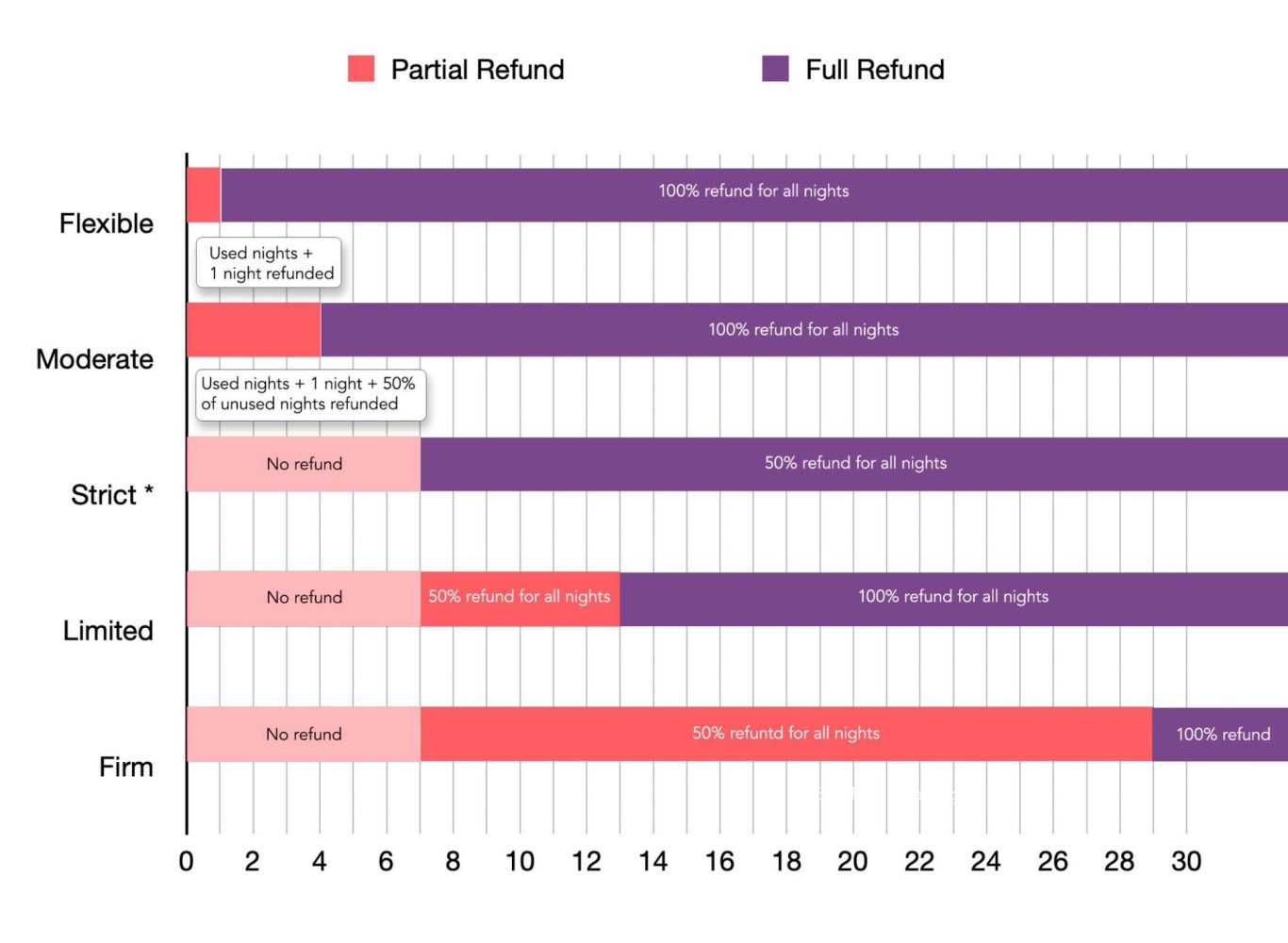
There's more good news: One of Airbnb's new features in this update is dynamic cancellation policies. Once these are available to all hosts (Airbnb is rolling this out to select hosts now and expects broader availability in early 2026), you can implement a moderate cancellation policy for the next few days to attract bookings while also running a firm cancellation policy to protect dates like Christmas and other high-season periods. We don't know how this will work yet, but it sounds promising.
Speaking about subject to change without much notice, Airbnb changed its cancellation policies on October 1st.
You should review your cancellation policy, as Airbnb has quietly updated its policies over the past two weeks.
- For one, all reservations now include a free 24-hour cancellation period, allowing guests to cancel for a full refund up to 24 hours after the reservation is confirmed, provided the reservation was booked more than 7 days ago. (Oh, of course, "Select hotels are exempt from the 24-hour free standard cancellation period.")
- Secondly, neither the flexible nor the moderate cancellation policies include a full refund to the host.
You can read all about it in this help article (https://www.airbnb.com/help/article/475).
Did you know this? I didn't, and I just reread all the information I had received over the past month to see if I missed an announcement. Spoiler alert: I didn't miss anything; there was no announcement.
New flexible cancellation policy
A guest will be billed for one extra night on the flexible cancellation policy if they cancel during their stay. Say a guest books a 7-day stay and cancels on the second night. Airbnb will pay you for the 2 nights they stayed, plus one extra night.
New moderate cancellation policy
The moderate cancellation policy is marginally better: if a guest cancels less than 5 days out, you will get paid for the nights they stayed, plus one night, plus 50% of the unused nights.
In short, here's how this works: if your cancellation policy is flexible or moderate, guests can "Reserve Now, Pay Later" a year before their check-in date, which blocks your Calendar for that entire period. They then have approximately one week before their check-in date to cancel. Good luck trying to fill your Calendar with a replacement booking on such short notice. You're going to drop your rates significantly to be of any interest to guests.
Unless, of course, that same guest who blocked your Calendar for almost a year comes back and books the exact dates at rock bottom prices. But not to worry - Airbnb says "Reserve Now, Pay Later" is what guests want, and it's shown to be very successful … for the platform. And that's the main reason Airbnb is now rolling this out worldwide.
Now, before you say that guests won't take advantage of this option and abuse the system, I've been seeing a bunch of hosts concerned about this. A few days ago, a fellow host in the UK posted the following in a Facebook group:
"We have TV money saving pundits in the UK, they already advise booking early and canceling last minute and rebooking straight away because they know a lot of hosts use dynamic pricing and the price will drop (…) I just wish it wasn’t open to abuse."
If you want to avoid the hassle of "Reserve Now, Pay Later" reservations and the real problems hosts can face, avoid selecting flexible or moderate cancellation policies.
That will work.
For now.