
AI Just Cracked the Perfect World Cup Strategy
Miami, FL March 2026
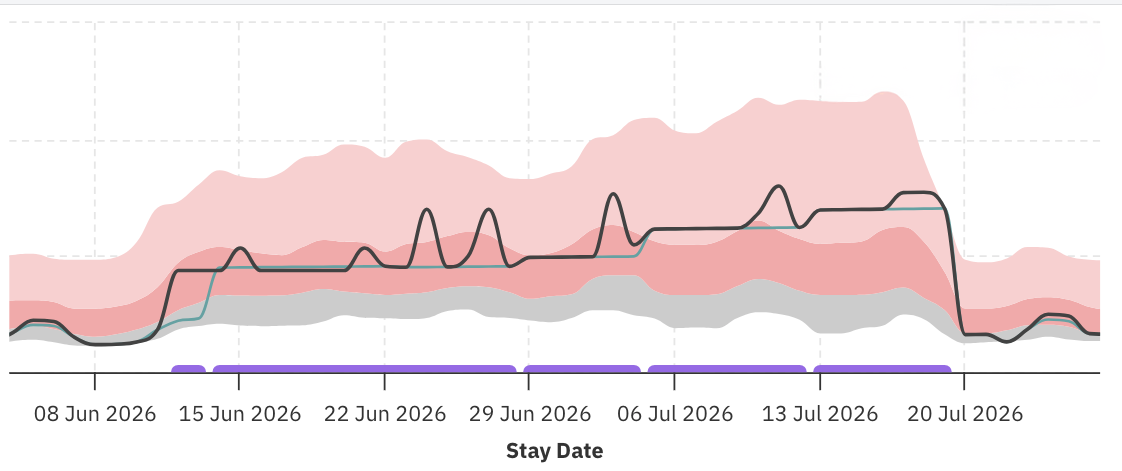
It all began when I listened to a podcast on FIFA strategy. During this panel, a couple of revenue managers were discussing how they were positioning their homes for the upcoming World Cup. Adrienn Janics (Director of Revenue Management at Angel Host) manages properties in Miami, so her thoughts were especially pertinent.
One of the comments she made had me perk up. Up to now, our strategy has been to guard our rates with high prices and long Length of Stay (LoS) rules. But she commented on two games: Saudi Arabia vs. Uruguay and Brazil vs. Scotland.
”For the first game [Saudi Arabia vs. Uruguay], there is not much demand. The occupancy rate is pretty low, but on the 24th of June, when Brazil and Scotland are playing, the market occupancy rate is picking up. So we can definitely see a difference between the matches.“
And that got me thinking. We’re not getting granular enough in our strategy. First of all, there are two distinct parts to the World Cup: the Group matches (in Miami, we already know who is playing those) and the other matches, where no one can know which teams will battle it out.
- The first four games in Miami are group matches, with the first on June 15th and the last on June 27th.
- Three more games follow: one of the group of 32 on July 3rd, the quarterfinal, and the bronze final.
But how does one figure out which rates to set, which minimum-stay rates to select, and which game will have the highest demand and which will not? As Adrienn said, the second two matches will attract more fans, creating higher demand and higher prices.
Enter AI. I wrote a prompt asking AI to be my revenue manager. I gave it some details about our listings. Told it the match dates and which teams are playing, and asked it to consider historical fan behavior, current betting odds, and future price predictions for FIFA. I told it to provide me with suggested Average Daily Rates, LOS, and cancellation policies.
I also asked it to give me the dates so that we would know which teams will match up for the last three games (Booking windows for those games range from 7 days to 2 days!), and finally shared my thoughts about which types of fans will be booking and how their booking behavior is different from other fan segments.
Then I plugged the data into a spreadsheet, compared it to last year's historical pricing, and entered the results into Pricelabs, our dynamic pricing software.
Easy Peasy.
Now, all we need to do is keep an eye on how FIFA bookings continue in the Miami market, but I’m much happier with this strategy than the one we had in place before.
Are you using AI to help get your World Cup Strategy nailed down?
Psst! My secret to Guest Favorite!
Miami, FL Jan 29, 2026
BTW: It drives twice as many bookings as Superhost!
(by Jacomina)
I've been hosting for 7 years now, and after some really interesting experiences at the beginning, my husband and I have finally cracked the code for consistently getting our listings rated as Guest Favorites.
Although Airbnb doesn't share exactly what goes into a property being rated a guest favorite, we've found a cheat code that works. It works so well, I'm almost reluctant to share it - well here it is anyway:
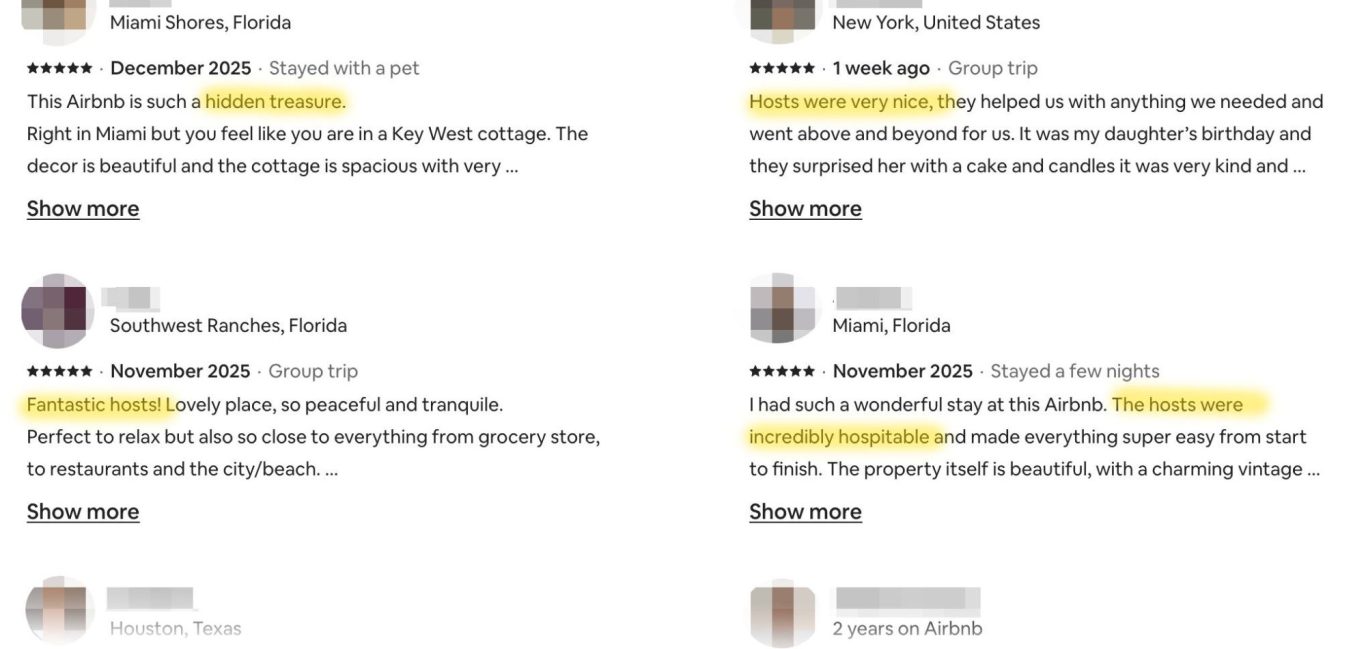
Focus on Hospitality.
Shocker. I know.
Here's where you need to start:
Set clear expectations with every guest.
As part of Airbnb’s ground rules for hosts, a listing should accurately describe the space and reflect what guests will find from check-in to checkout. Here are a few practical ways you can help your members set clear expectations and still delight guests:
- Tell guests exactly what to expect. Use your description and photo captions to share key details, such as nearby construction, a dog on the property, slow hot water, or anything else guests should know.
- Keep your basics accurate. List the correct number of rooms and bathrooms, and make sure your listing type matches your place (for example, an apartment in a complex should not be described as a rural home).
- Don’t exaggerate your amenities. If you’re an hour away from a popular attraction, don’t say you’re nearby—specify how far you are. If your pool or hot tub has seasonal hours or closing times, include those in your listing.
- Underpromise and overdeliver. Use realistic photos, stay on top of routine maintenance so everything listed is clean and working, and consider a small extra at check-in, like a handwritten note or simple treat.
[I'll continue to write a series on how to become a guest favorite, but you first need to set a foundation to build on.]
It’s Superhost Season!
(But does it beat a Guest favorite?)
It’s that time of year again, when Airbnb bestows the Superhost badges on hosts - if you’re one of these hosts who earned that coveted distinction, congratulations. Airbnb evaluates hosts four times a year based on their performance in the previous quarter.
Two years ago, in November 2023, Airbnb introduced the Guest-Favorite badge. What’s the difference? How do they impact your business, and can you have both (spoiler alert: yes, you can)?
Miami, FL Jan 15, 2026
First, let's look at the requirements you need to meet to get either status:
Superhost
Airbnb measures how you performed as a host over the previous 3 months. You can check your own progress towards Superhost here: https://www.airbnb.com/performance/superhost.
Here’s what you need to reach in the time frame to make Superhost:
- 10+ reservations
- 90%+ response rate
- >1% cancelation rate
- 4.8+ overall rating
About a third of all hosts in the US are Superhosts, with estimates from some areas such as Sevierville, TN (60%), Asheville, NC (59%), and Flagstaff, AZ (55%) significantly outpacing that average. Oh, and FYI, guests can not filter for Superhosts when searching for a home on Airbnb.

Guest Favorite
Airbnb introduced this new program 2 years ago. Guest Favorites, a collection of the 2 million most-loved homes on Airbnb, which again is about a third of Airbnb’s listings.
- At least 5 reviews from guests in the past 4 years, including at least 1 review in the past 2 years
- Overall star ratings, feedback in guest reviews, and communication between guests and hosts on the platform
- High ratings for check-in, cleanliness, accuracy, communication, location, and value
- A superb record of reliability, with host cancellations and quality-related customer service issues below 1% on average
There are four tiers in Guest Favorite: 1%, 5%, 10% and a generic Guest Favorite. Since you’re competing against other homes in your area, those ratings can change a lot.
While the requirements for Superhost are pretty straightforward and based solely on your performance as a host, Guest Favorite is a little more nuanced, as this badge compares top listings. In other words, if there are many excellent listings in your area, it is much more challenging to achieve Guest Favorite status than if you’re the best listing in a sea of mediocre ones.
And yes, Guests can filter their search for Guest Favorite listings, which should give you a hint on which one Airbnb places a higher value on when presenting guests with possible homes to book.
Which badge should you strive to achieve?
If all you want is to be able to say that you are a Superhost, it’s not worth it. You don’t get a plaque to display in your home or a sticker for your car. However, if your motivation for being a Superhost is to provide excellent hospitality to your guests, then keep doing what you’re doing, and I bet you’ll become a Superhost in no time.
What's better?
It’s hard to gauge this based on the info Airbnb shares, as they are understandably very tight-lipped about how their search algorithm works. However, Pricelabs, the dynamic pricing company, has a tool that helps hosts determine the base rate for their listing. In that tool, you can see how they calculate your base price and no surprise two of those data points are Superhost status and Guest Favorite.
What we’re seeing in our listings is that Pricelabs weights the Guest Favorite status about twice as much as having only the Superhost badge. And to compare its weight in their calculation with another data point, Guest Favorite status has about the same importance as the quality of the amenities you offer.
Of course if you can get both that's the best of both worlds.
Becoming a Guest Favorite takes a little more work and does require some research to understand what kind of homes you’re competing with. What makes a home a Guest Favorite in Miami is going to be very different from what makes a home a Guest Favorite in the Florida Keys.
How to make your listing a Guest Favorite
Take some time to run a search on Airbnb with the Guest Favorite filter on, and look at 10 or 15 listings around yours. Look specifically for places close to your home, with bedrooms, amenities, and features that those listings offer their guests. Read through their recent reviews to see if guests are constantly praising the same thing. If you don’t have that amenity, don’t offer what they do, or don’t hear those praises in your reviews, you now have a roadmap to becoming a Guest Favorite.
What matters most in the end is that you work hard to provide your guests with the best possible experience when they stay at your home. If you do that consistently and for some time, you will get both distinctions.
A Quick Lesson In Pricing
Miami, FL Dec 11, 2025
Or why we love Airbnb custom promotions well, sometimes
'Tis the season when many guests head to Miami. With booking windows around 3 weeks, many hosts worry as they see empty calendars for Christmas or New Year's Eve.
But before you slash your prices in a panic to attract guests, there are a few tricks you can try first:
#1 Reduce your minimum length of stay.
If you're requiring guests to stay for a whole week, remember that your listing won't even show in search for anyone looking for a shorter stay. We're booked over Christmas (a 4-day stay), over New Year's (a 3-day stay), and another 4-day stay that slips in perfectly between the two.
Those 11 nights made up 12% of our yearly revenue. We would have missed all three if our minimum stay were 5 days.
WARNING: Make sure your minimum length-of-stay requirement fits your market. If you are prohibited from renting for short periods, then don't. We also do not offer 1-night stays - for one, they make up only 1.6% of all bookings in our competition, and secondly, it's a lot of stress on our cleaning crew to turn over a 4-bedroom listing twice in 24 hours. Please understand your market - one of our friends makes a killing on one-night stays, but his listings are studios and one bedrooms.
#2 Ease up your cancellation policy
There's no reason to have a 30-day strict cancellation policy when the dates you're trying to get booked are 2 weeks out. Taking your cancellation policy down to 14 days will do the trick. The problem is that if you lighten your cancellation policy for last-minute bookings, a guest who wants to book in a few months will enjoy the same lax policy. Airbnb has promised us dynamic cancellation policies in October - they can't come soon enough.
WARNING: As of October 1st, 2025, the flexible and moderate cancellation policies allow guests to Reserve Now and Pay Later. This new way to reserve means that your guest can book your place for next year, not get charged a dime, and cancel their booking a few days before their check-in date. Good luck getting the same rate that you got on a reservation made for a high-priced date - like a FIFA playoff game, for example - 6 months before the game, with the rate you'll need to discount for a last-minute booking. Oh, and you also don't get 100% of your payout with those two policies since October 1st, like we used to, but that's a different story for another time.
#3 Slash your price, no wait, don't do that. Do this: Set a custom promotion.
Custom Promotions. Love them or hate them, in my experience, they work well at raising your listings' positions in search results, particularly in the short run. When Airbnb introduced them, hosts would double their price on the calendar and slash the nightly rate in half to show a 50% discount, and Airbnb quickly caught on to hosts gaming the system.
Here's how Airbnb calculates the base rate you're discounting from now: The channel looks at the day of the week you want to discount - let's say a Thursday - and then it looks back on the final advertised or booked rate of every Thursday in the past 8.5 weeks or 60 days. Airbnb then takes the mean of those 8 or 9 numbers (the mean is the middle value when you sort your data by value). And that's the rate you are discounting from when offering a custom promotion.
The unintended side effect of this calculation comes in when you've had solid bookings in the past 60 days. In our experience, the mean nightly rate is often much higher than the rate our dynamic pricing software calculates.
This means we can discount the nightly rate on Airbnb by 15%, 25%, or even 33% and still get the same rate that our dynamic pricing software would have reduced the last-minute rate to.
Airbnb rewards these custom promotions with a discounted strikethrough price for 10-14% off, a discount banner on your listing for 15-19% off, and highlighted in emails for discounts over 20%.
WARNING: If you have not been booked in the past 2 months or your pricing has been very low - for instance, if you're coming out of our low season in September and October - this strategy will not work. Yes, you can still discount your rates to boost your search ranking, but you will actually get bookings at those lower prices. When we implement these, we do so only when our discounts bring pricing to around the same levels our dynamic pricing tool would have set anyway.
Also, remember that once a custom promotion is set, it overrides any dynamic pricing, so you've got to keep an eye on those dates
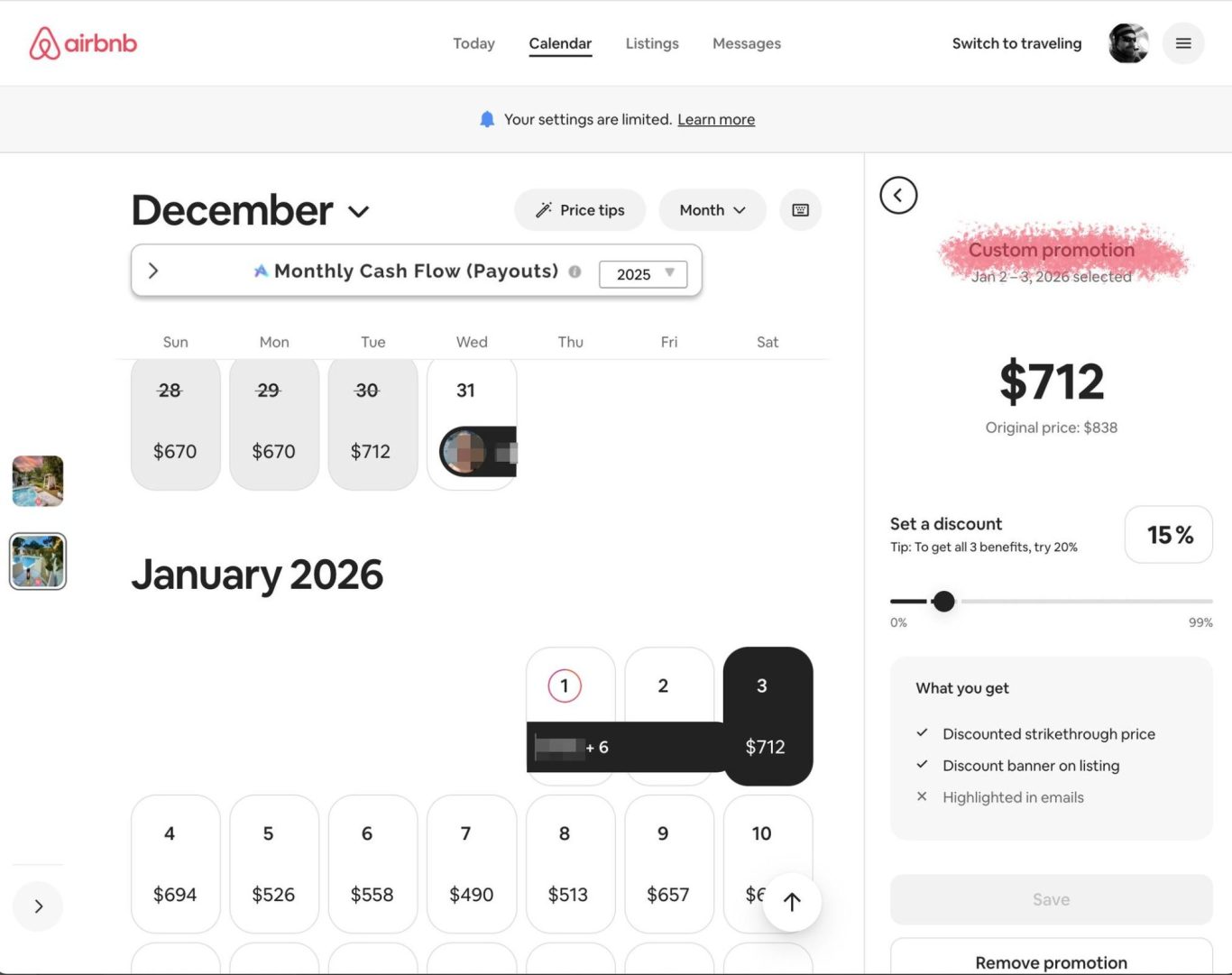
Case Study: Our New Year's booking
Yesterday, one of our listings still had not been booked for New Year's, and we had a booking departing on December 31st, which made the prospects of getting someone to book our place for New Year's slim to none, since the 31st was right at the edge of our booking window.
We applied a 15% Custom Promotion for those dates, which lowered our Airbnb price while keeping it close to what our dynamic pricing predicted.
Yesterday evening, we got a reservation at a rate 20% above what our competition was booked at for the same days. Because this booking is for seven guests, and we charge an additional guest fee for bookings with over four guests, the actual nightly rate was 33% higher than what other listings had been booked at.
Not too shabby, considering we were booked at a nightly rate $300 higher than our competition, while Airbnb displayed a 15% discounted strike-through price and a 15% discount banner on our listing. Compared to last year, this year's ADR is up 200%.
Master the rules, win the revenue game.
An Unexpected Lesson In 5-Star Pricing
Miami, FL Sept 08, 2025
Jacomina Depuhl and I had the pleasure of staying at the Fairmont, one of California's longest continuously operating hotels. Airbnb invited us to their community leader summit in San Francisco this past weekend. We stayed in an Airbnb for the first two nights and a hotel for the last one.
I had stayed at this amazing 5-star property over three decades ago and wanted to show Jacomina Depuhl the famous penthouse, built by an oil tycoon on the hotel's roof.

A lesson in revenue management
When we got the tour of the glorious penthouse, we saw the best interior decorated and designed place, as I expected, but what I didn't expect was a lesson in revenue management.
The 7,500-square-foot, 3-bedroom home has hosted some very famous people for a few days, including JFK (and Marilyn Monroe), Russian President Michael Gorbachev, President Biden, and the United Nations. If you saw the movie "The Rock," Sean Connery gets his haircut on the penthouse balcony.
Now you don't have to be a celebrity to stay here; everyone can rent the Fairmont penthouse for a low, low nightly rate of $20,000 if you book online. If it's available and you book it on the day of your arrival at the desk, the price drops to $10,000.
Here's a pro tip: if the suite is available, you can book it for a mere $5,000 when you book after 8 pm on-site.
Here's the lesson for a short-term rental operator:
Now, I don't suggest raising the price of your listing to $20K, but we can all learn from people who have been running a hospitality business since 1907. Gone are the days of setting a price for your place and forgetting about it.
75% discount within 24 hours
You can book the Fairmont's penthouse for three different prices within just a few hours:
- $20,000 booked online
- $10,000 booked at the desk the day of check-in
- $ 5,000 booked after 8 pm
Fun fact: I had the opportunity to stay in their penthouse for three nights over 30 years ago, but the price then was $8,000 per night.

When we sell a stay in our homes, it is a perishable good: if no one books your listing yesterday, you can never resell it that night to a guest. The Fairmont is aware of this fact and is willing to offer a 75% discount on the room for a last-minute reservation.
I also bet that you won't be able to book the penthouse for $20K if the demand for hotel rooms in San Francisco is at its peak. It's gonna be significantly higher.
I'm also not suggesting that you allow same-day check-in, nor am I saying that you need to discount last-minute stays by 75%.
However, I want to learn from how a 5-star hotel prices the same room. How do you know what price is right for your listing?
We use dynamic pricing to determine the correct price for our listings, and the software we use, Pricelabs, adjusts the price for the next 365 days.
The 10 Types of Travelers
Miami, FL Jul 14, 2025
Over the last few weeks, we've looked at how to improve your listing's search performance. Today, we'll take a look at who is booking your home and why that's important.
Who books your home?
Do you know? I asked AI for 10 traveler types that book a short-term vacation rental - here's the list:
Families with Kids
Prioritize space, safety, kitchens, laundry, and child-friendly amenities like cribs or toys.
Romantic Couples
Look for privacy, ambiance, and special touches like bathtubs, fire pits, or scenic views.
Pet Owners
Need pet-friendly policies, enclosed yards, nearby dog parks, and bowls or pet beds.
Wellness Travelers
Seek calm, aesthetic environments, yoga spaces, in-home massage, and healthy living features.
Digital Nomads
Value strong Wi-Fi, dedicated workspaces, ergonomic chairs, and quiet neighborhoods.
Adventure Seekers
Want proximity to outdoor activities, gear storage, early check-ins, and local tips.
City Explorers
Prefer walkability, local food scenes, transit access, and vibrant neighborhoods.
Multi-Generational Groups
Need separate sleeping quarters, multiple bathrooms, large common areas, and accessibility.
Event Attendees
In town for weddings, festivals, or conferences. They prioritize convenience and flexible stays.
Luxury Vacationers
Expect high-end finishes, concierge-style service, privacy, and curated experiences.
If you still need help, try this #AIHostHack: take screenshots of your listing photos and upload them to AI. Do the same with your description. Then, ask AI to review the images and the description and tell you what it thinks the top 3 guest types are. It's a good place to start, but don't let AI decide for you.
(…and Why You Shouldn’t Care About Half of Them)
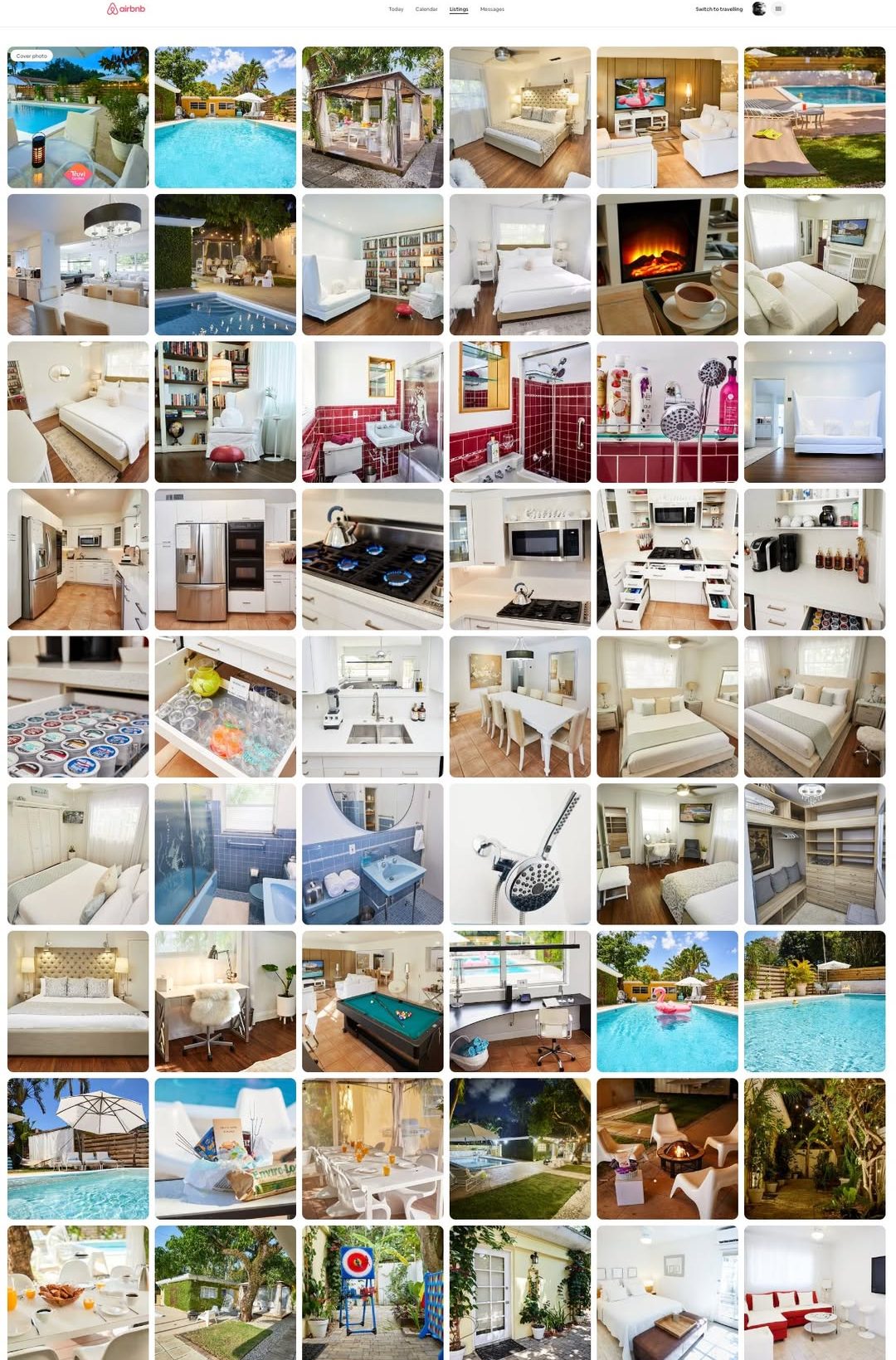
As you can see, the list is quite varied, and you can't be all things to all traveler types. Which type of traveler does your listing cater to? You can easily cross off some of these options if you don't want pets, such as no pet parents. If your place is not private, don't focus on Romantic couples.
Look at your past guests.
Look at your past guests and see how they stack up. I'm not saying you'll never have a romantic couple book your home, but it's best to focus on the types of guests who want to book your listing. Trying to make your listing appeal to everyone is not a valid strategy.
Focus on three or four guest types and make your listing as appealing to those guests as possible.
Case Study:
We've seen a significant increase in international guests. Over the past year, 15% of our guests have come from outside the US. In the summer, our international guests make up more than half of our bookings.
Homework:
Take a minute to think about the needs of an international traveler that an American traveler doesn't need. What amenities, information, suggestions, etc., do International travelers look for in a listing? Leave your ideas in the comments.
Price Doesn't Matter
Miami, FL Jan 26, 2025
Lower the price
Conventional wisdom suggests that the easiest way to attract attention is to drop the nightly rate, as everyone loves a deal.
Airbnb even has a great tool called "Promotions," which helps boost your discounted listing by adding some marketing incentives to increase visibility, depending on how deeply you discount your listing:
A discount of
- 10% - 14% gets you a discounted strikethrough price
- 15% - 19% earns a discount banner on the listing
- and 20% and above get your listing highlighted in emails
Airbnb is smart enough to know that right now, many of you are probably thinking: "Cool, I'll raise my price by 20% before I apply the 20% discount." Sorry to say that won't work. [If you want to know precisely how Airbnb figures out the specific rate for the day you're looking to discount, read the last paragraph of this post. It's a bit mathy, but it's not too bad.] The short version is that Airbnb reviews the rates you advertised over the past two months.
A short lesson in revenue management
A few decades ago, airlines saw that price drives demand and invented revenue management. The simple version is:
- High demand drives higher prices.
- Low demand drives lower prices.
Therefore, if you decrease prices, you raise demand, and if you raise prices, you lower demand.
For vacation rental hosts, this means we can charge a higher price for far-out dates (like the FIFA match days in 2026), as many more people will see and potentially book our homes. However, for a stay that falls well within our booking window, the prices must be highly competitive to secure a booking.
[The booking window is the number of days between the time a guest makes their reservation and when they check in.]
Additionally, vacation rentals are highly perishable. If your listing sat empty yesterday, you can never sell it again that night.
A case study (or why Airbnb thinks a 20% discount really means 19.67% higher prices):
Since my July week falls well within our average booking window of 22 days, and since some money is better than no money, I'm willing to consider a sale (by raising my rates)!
Due to the short time I have to get booked, I've decided to reduce my nightly rate by 20% to take advantage of all three marketing incentives Airbnb offers to hosts.
Two things are essential to understand:
- Airbnb calculates the median price of my listing over the past 60 days. Guests booked those nights on average 22 days before arrival, with no discounts, so they commanded higher prices.
- Our Dynamic Pricing tool is analyzing the week of July and our market. Based on the data, it has lowered our nightly rate to generate clicks as it detects a lack of interest.
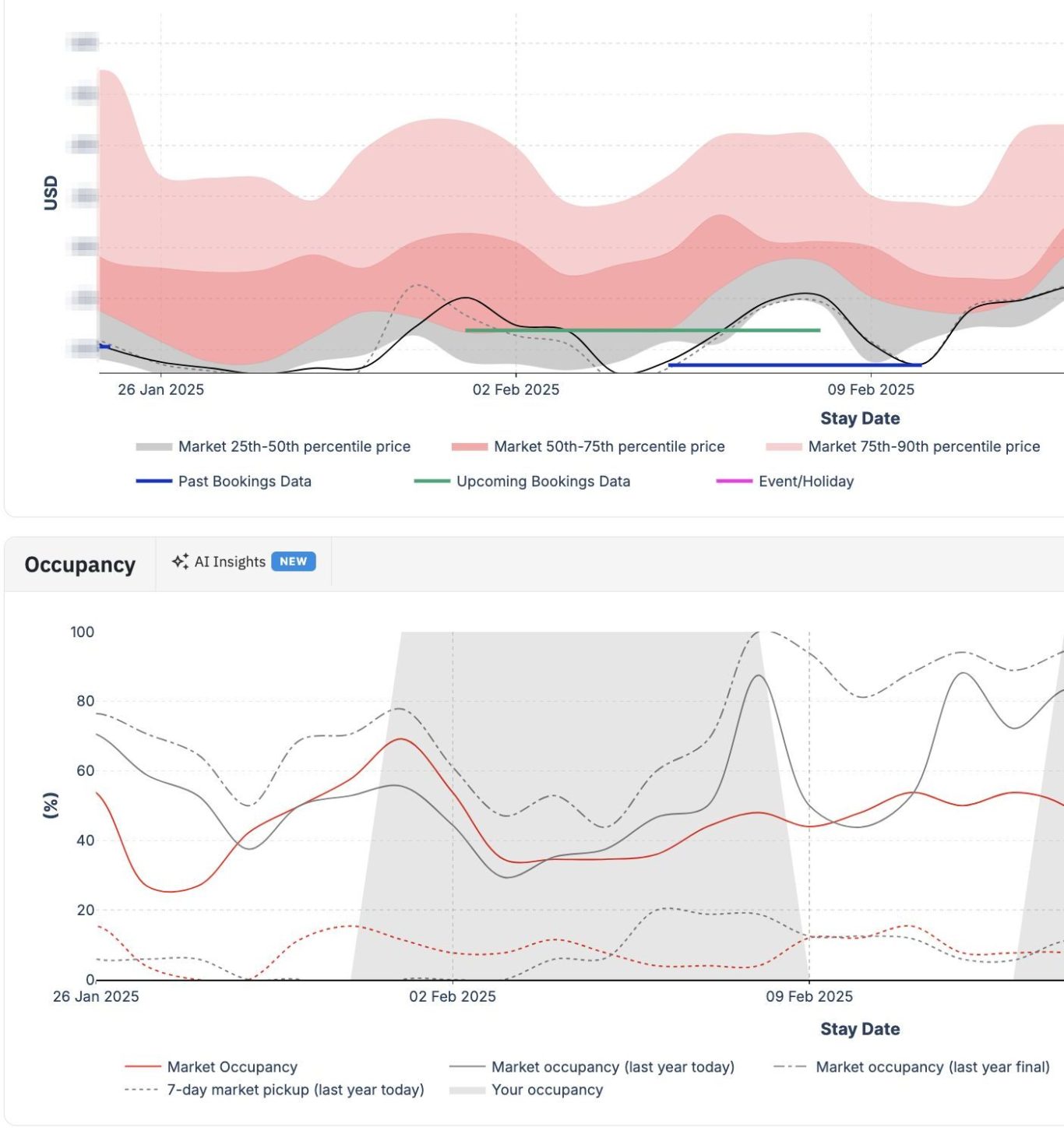
If I look at the neighborhood market data for that week, I would need to price my listing in the bottom 20% of the market to have a chance of getting booked.
In other words, when I create an opportunity on my Airbnb Calendar that discounts the nightly rates Airbnb calculates by 20%, I receive all three incentives and still end up with an average price 20% higher than before. That's a 40% swing to the upside (well, 39.67%, to be exact).
There’s a week in July (07/20-07/25) when no one is looking to book our Airbnb listing, which isn't surprising since July is our "(s)low season." Well, more accurately, it is our "a little less than high season" since Miami is a weird market.
However, I need to do something to entice a guest to book since the market pickup for that week is dropping an average of 5.2%. So, of course, I'll offer a discount and raise my rates.
[Go ahead and read that again. I know it sounds weird; hear me out: I'll offer a discount and raise my rates]
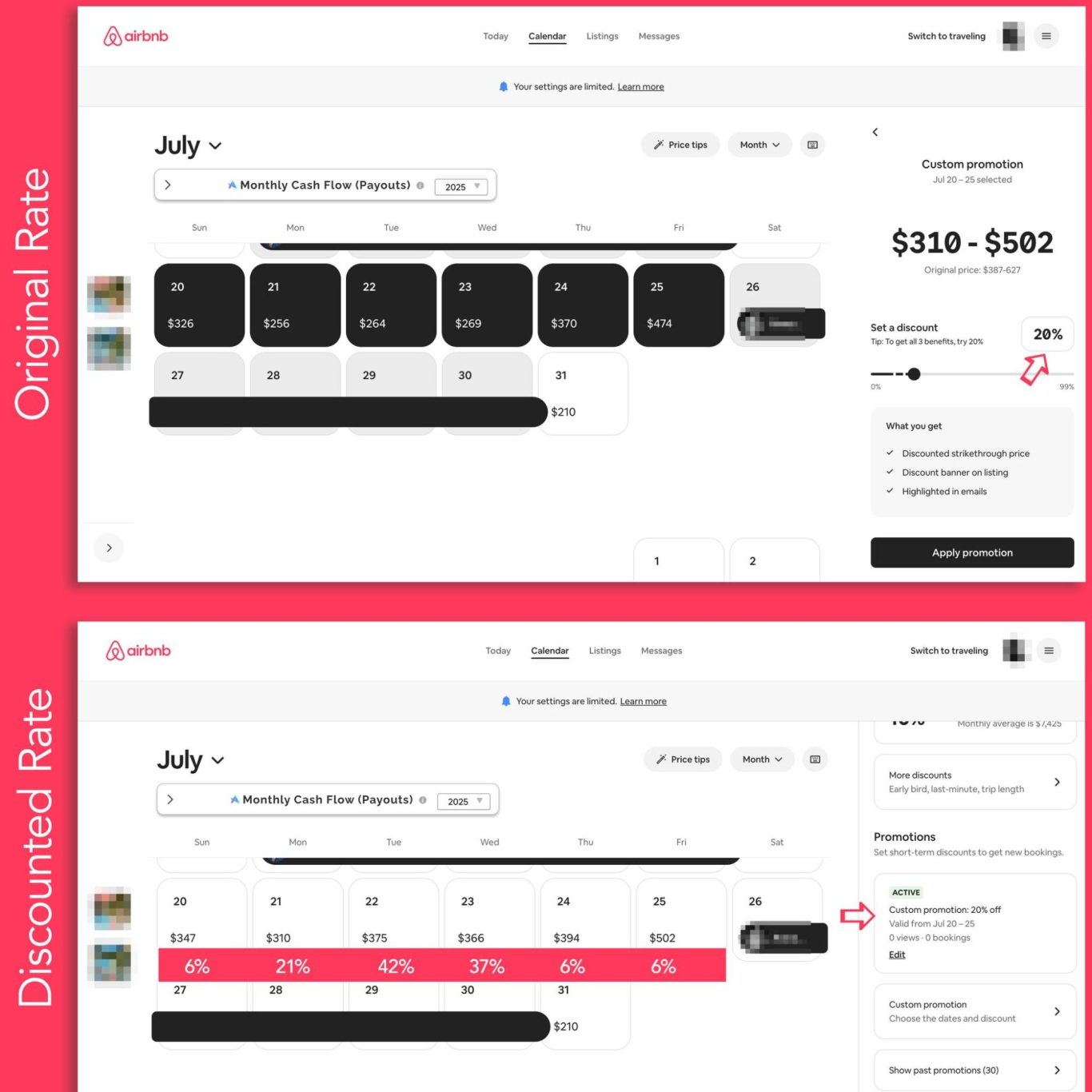
I'm eager to see what happens.
Our occupancy for July is already at 67.44%, so I'm going to keep this promotion going and am waiting with bated breath to see what happens. Will our listing get booked at the 40% higher rate? Or will it sit empty?
Early results
Over the last 24 hours, our first-page search impressions have increased by 38% and our click-through rate by 9%. I'm excited to see what will happen - maybe the price doesn't matter after all.
***
How Airbnb calculates the nightly rate, and to which rate does your discount get applied to. [This is the mathy part]
Airbnb calculates the price for which you can apply a discounted rate by taking the median (the price in the middle of a sorted row of numbers) over the past 60 days and uses that number to calculate the rate you'll discount. That's very different from the average; for example, if your rates for 5 days are $20, $22, $50, $200, and $250, the median price would be $50 (and the average would be $108.40). To make tracking more challenging, if you want to discount the nightly rate for a Thursday, Airbnb will use the median of all past 60-day Thursdays, which typically spans 8 to 9 Thursdays.
[Read all the details about Promotions in Airbnb's help article: https://www.airbnb.com/help/article/2719]
Price your listing like porridge!
Miami, FL Jan 26, 2025
Our pricing is data-driven.
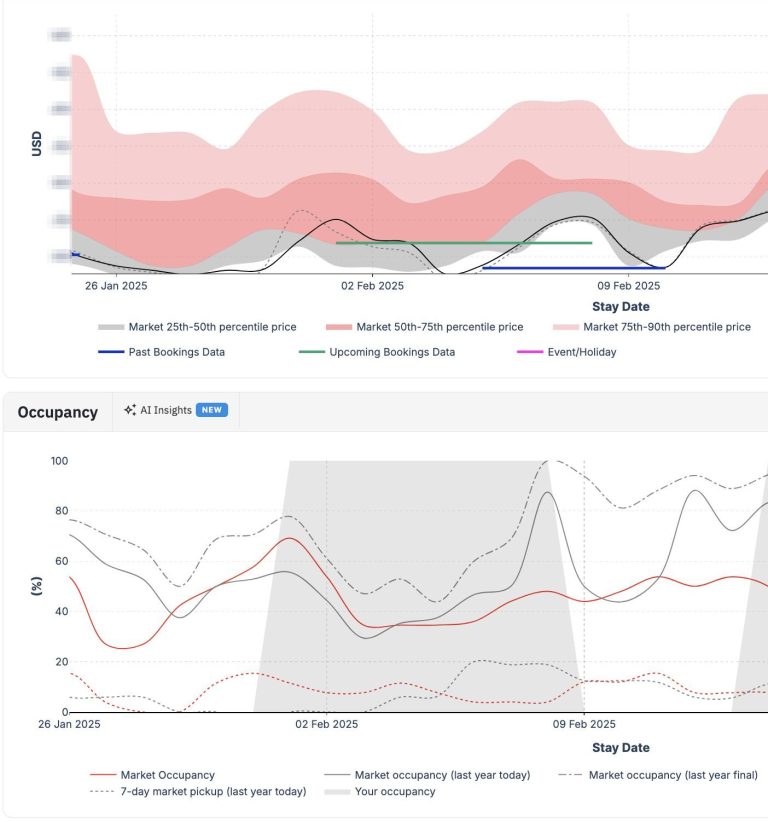
Historically, occupancy rates during the holidays are around 99%, but right now, two weeks before Christmas, market occupancy is only 60%.
If most listings in your market are already booked, there’s a strong chance your property will also be reserved. However, if only a few listings in your area have been booked, you may need to significantly reduce your prices to attract guests, as you will be competing with all available accommodations.
Top earners know how to price their listings
Experts report that nearly 15% more hosts have adopted dynamic pricing in 2024, bringing the total number of listings relying on pricing software to over 50%. That means that every second competitor of yours is already using powerful software tools to determine their correct prices - and it ain't the cheap listings that are doing this.
What is dynamic pricing?
Dynamic pricing, or yield management, was originally developed by American Airlines in the 1970s. In essence, it means that an airline—or in this case, a short-term vacation rental—constantly adjusts its prices based on real-time data of current demand.
Prices are higher during peak demand and lower during low demand. Nowadays, it’s not only the current demand that influences prices, but also predicted demand. To run a successful short-term rental, it’s crucial to set the "just right" price for your listing. We determine this ideal price every 24 hours.
What not to do
And no, we don’t spend hours in front of our computers analyzing competing listings on Airbnb, learning revenue management, and considering local factors like seasonal trends, scheduled events, or school vacations to manually adjust our prices for each of the next 365 days. That would take too much time, especially since we would need to do it again the following day and the day after that.
Dynamic pricing tools like Pricelabs take into account various factors, including demand, seasonality, occupancy-based adjustments, local events, competitors' performance, and more. We regularly monitor and evaluate our pricing strategy and results, but we have tools to help streamline this process. Those tools also do the daily heavy lifting.
Why pay for dynamic pricing?
Still unsure about the necessity of implementing dynamic pricing? Keep in mind that over half of your competitors are already using it. Additionally, since we update our prices daily, our listings on platforms like Airbnb are updated every 24 hours. This is something these platforms consider in their algorithms when determining where your property appears in search results.
According to a recent report from a leading Property Management Service, "Two must-have strategies for growth have risen in popularity. Dynamic pricing was cited 14.6% more often this year compared to last [year], while Upselling was mentioned 8.2% more often."
You might say, "I'll just use Airbnb's Smart Pricing—that's dynamic pricing too, right?" Well, kind of, but not really.
Remember that Airbnb (and other platforms) only earn their 15-20% commission when your place is booked. And 20% on a nightly rate of $10 is better than 20% of $0 that you get paid for an unbooked night. Therefore, they are more inclined to suggest a lower price to ensure some revenue rather than risk getting nothing.
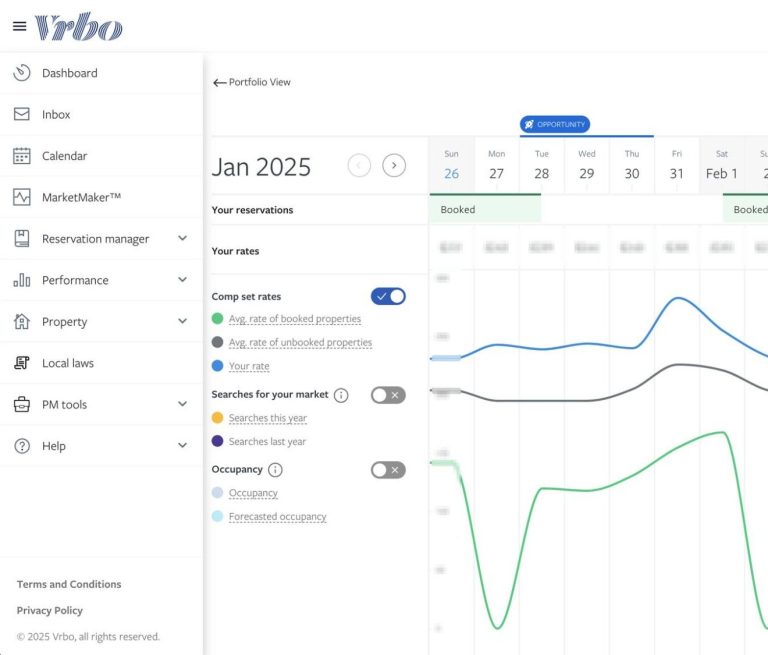
While, in my experience, VRBO’s Market Maker offers better results than ABB's Smart Pricing by utilizing Expedia's hotel pricing data in addition to vacation rental data, it's important to note that, like Airbnb, VRBO is also aware that a booked bottom of the barrel priced listing generates higher commissions than an unbooked property that's priced correctly. [Since this article was first published, Airbnb has introduced Price Tips, which are much better than Smart Pricing.]
(As a side note: I'll share the secret to achieving 100% occupancy: list your place at $10 a night. I guarantee you'll have a full calendar, but you won’t make any profit. This hidden knowledge and $5 will buy you a cup of coffee.)
Yes, dynamic pricing does come with a cost, but you will generate more revenue than you would with manual pricing.
Oh, and you can sign up for a free Masterclass from Pricelabs to learn how to increase your revenue by pricing your listing just right.
Imagine it's December 10th, and your property is still not booked for the Christmas holiday. And you're worried and contemplating whether you should lower your prices to secure a booking?
The answer depends on several factors, and is just like in the story of Goldilocks - your porridge (your listing) can't be too hot (priced too high) or too cold (priced too low), but it has to be just right.
But how on earth do you figure out the "just right" price?